Link to As Israel and Iran exchange unprecedented blows, Gulf nations emerge as pillars of restraint, advocating stability and peace amid looming chaos.As Israel and Iran exchange unprecedented blows, Gulf nations emerge as pillars of restraint, advocating stability and peace amid looming chaos.
Link to
Link to 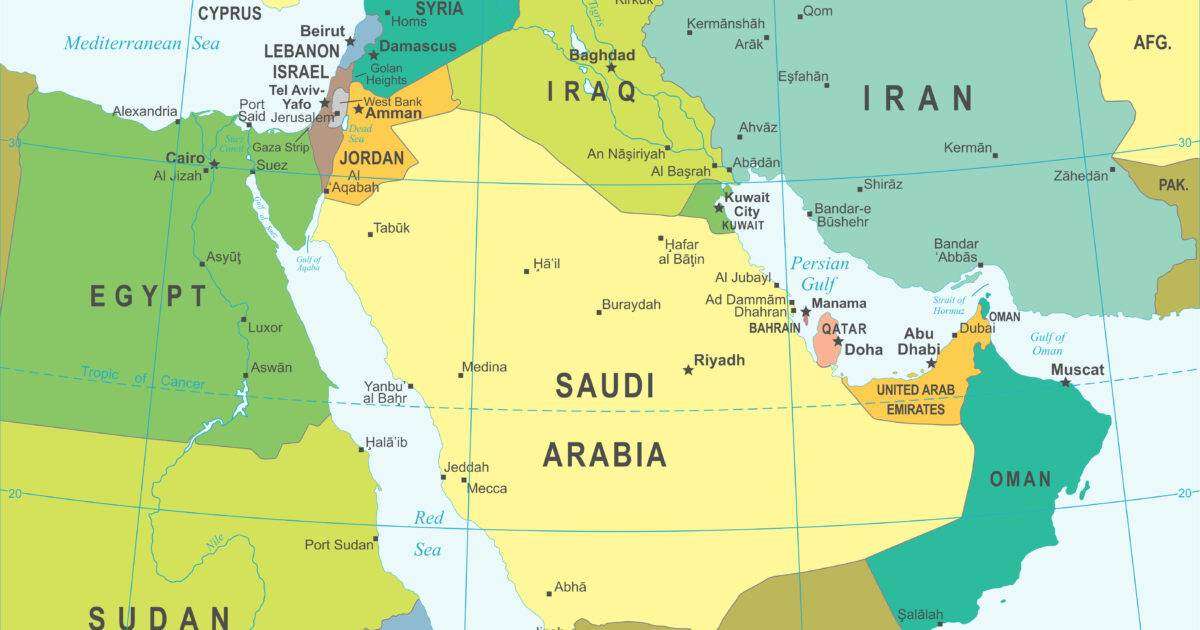
By Dr. Nidal Shoukeir Professor of Strategic Communications and Governmental Relations
The Gulf and the wider Middle East have, in recent days, witnessed increasingly tense and perilous developments, following Israel’s unprecedented strike against the Islamic Republic of Iran and the retaliatory attacks that ensued. This direct confrontation between Tel Aviv and Tehran has revived memories of major wars and ushered in a fraught geopolitical atmosphere teetering on the edge of explosion. The operation launched by Israeli Prime Minister Benjamin Netanyahu’s government on the early morning of the 13th of this month marked a turning point in the region’s history—pushing it to the mouth of the volcano, amid growing fears of the conflict expanding to other countries. The prospect of a regional—or even global—war looms, with consequences that are both unpredictable and difficult to contain. So far, the region remains in a state of anxious anticipation, haunted by the very real possibility of sliding into more dangerous scenarios. While the exchange of strikes between Israel and Iran continues, the escalation has—up to now—remained confined to both parties without spreading to neighboring states. Yet this does not erase the stark reality of regional fragility, nor diminish the risk that a miscalculation or reckless act could ignite a broader and more devastating confrontation at any moment.
A Gulf Role Defined by Responsibility and Restraint
Amid this tense landscape, the Gulf Cooperation Council (GCC) countries have once again emerged as a voice of wisdom and a stabilizing force—not only for the region but for global security as a whole. The Gulf capitals responded to the developments with exceptional rationality and strategic maturity, opting from the outset for a position grounded in de-escalation, restraint, and a call to halt the spiral of violence. Of particular note were the diplomatic efforts led quietly yet actively by the Kingdom of Saudi Arabia and the United Arab Emirates, aimed at containing the crisis and mitigating tensions, despite significant political and regional pressures. Gulf leaders—who see themselves as guardians of the region’s security—spared no effort to localize the crisis and prevent its expansion, while advocating peaceful solutions based on wisdom, balance, and collective interest. Despite past tensions with Iran, widely viewed in the Gulf as a destabilizing force through its regional policies and proxy networks, the Gulf countries swiftly condemned the surprise attack on the Islamic Republic and called for immediate de-escalation and crisis containment. This balanced and responsible stance should not be interpreted as alignment with Iran—whose actions have repeatedly undermined regional stability—but rather as a principled commitment to peace and security in the Gulf and beyond.
Gulf Stability: A Pillar of Peace and Development
It is widely recognized that the Gulf model of progress over recent years has been rooted primarily in stability. The recent Gulf responses to the crisis do not merely reflect a policy of restraint; they embody a comprehensive crisis-management philosophy—one that avoids impulsiveness and seeks to create space for dialogue, even with adversaries. This is a diplomacy of responsibility—governed by strategic wisdom and higher interests, rather than impulsive alignment with confrontational blocs. Moreover, Gulf countries increasingly see regional stability as essential to sustaining their ongoing transformation and development projects—from Saudi Arabia’s Vision 2030 and the UAE’s Vision 2071, to the knowledge economy and artificial intelligence initiatives in Qatar and the Emirates. Any new war in the region would represent a direct threat to this progress, risking strategic achievements that cannot be easily recovered.
The Gulf: Voice of Moderation in Times of Chaos
Today, public sentiment across the Gulf reflects deep concern over the potential collapse of stability in this sensitive and strategic region. The Gulf people are clearly dismayed—not by Iran’s suffering, nor by a potential Israeli military victory—but by the looming danger of regional chaos. The collective desire is simple yet profound: peace and stability above all else. For this reason, it is incumbent upon the international community—particularly the United States—to support the Gulf in maintaining regional calm. Any breach of security in this region would have grave repercussions for global stability. The importance of the Gulf is no longer confined to its economic value; it has become a global pillar of political and strategic balance. Large parts of the region now represent promising models of modern governance based on moderation, dialogue, and respect for national sovereignty. The Gulf and the broader Middle East need, now more than ever, alternative paths—ones that diverge from the destructive cycles of war and crisis. As Sheikh Mohamed bin Zayed Al Nahyan, President of the United Arab Emirates, has rightly stated: “The Middle East needs wisdom, a new vision, and dialogue to achieve a peace that fulfills the aspirations of the region’s peoples.” This vision aptly captures the course the Gulf countries are currently charting: rational decision-making, balanced approaches, and a genuine commitment to building sustainable peace—not a fragile calm dictated by fleeting power dynamics. Indeed, the region is undergoing a defining test. And in this test, the Gulf states are proving equal to the responsibility—demonstrating that they have truly become the cornerstone of regional security and global stability. Now imagine, for a moment, if Iran had shown even a fraction of that same responsibility—or heeded the wise counsel of its Gulf neighbors. Would the region still be caught in the current crisis?
(Associated Medias) - Tutti i diritti sono riservati
(Associated Medias) - All rights reserved