by Redazione
The unity of Syria cannot be maintained through slogans or idealized speeches, but through a new governance model that reassures all Syrians and rebuilds trust across communities. Federalism—though painful or controversial for some—may today be the only viable path to saving the country and creating a future in which all groups coexist under a shared national roof.
By Dr. Nidal Shoukeir
Professor of Strategic Communications and Governmental Relations
On January 29 of this year, Ahmed Al-Sharaa assumed the presidency of the Syrian Arab Republic for the transitional period, just seven weeks after Bashar Al-Assad’s flight and the collapse of his repressive security regime. In practice, Al-Sharaa’s rise to power encountered no significant opposition, as the country was still under the positive shock of emerging from the long-standing horrors of the Assad dynasty’s notorious rule, which had lasted nearly six decades.
Between Assad’s Flight and Syrians’ Hopes: The Beginning of Al-Sharaa’s Era
During this period, many Syrians, regardless of their affiliations or backgrounds, believed the opportunity had finally come to build a new Syria that reflected its people. They were convinced that any new system would be infinitely better than the one that had just collapsed. At the same time, Western countries chose to overlook the past of Al-Sharaa and his associates, granting him a golden opportunity by opening a new page based on present actions and future commitments.
However, alongside this Western openness toward Al-Sharaa’s government and the lifting of sanctions, three principal demands were clearly set:
-Protecting minorities—including Christians, Alawites, Druze, and Kurds—and ensuring their meaningful participation in political life.
-Actively engaging in counterterrorism efforts and eliminating extremist organizations.
-Finding a sustainable solution to the issue of foreign fighters, one of the most complex challenges of the new phase.
Thus began Ahmed Al-Sharaa’s chapter in modern Syrian history, supported by significant Arab backing—most notably from Saudi Arabia, which worked diligently to remove obstacles for him both regionally and internationally, with the aim of rebuilding the Syrian state. Crown Prince Mohammed bin Salman played a decisive role in this effort, particularly by arranging a meeting between Ahmed Al-Sharaa and U.S. President Donald Trump in Saudi Arabia—a pivotal step toward lifting international sanctions on Syria and normalizing relations with the new regime in Damascus.
Media Image vs. Field Realities: The Gap Between Perception and Reality
In the early phase, Al-Sharaa succeeded in projecting a highly positive image of Syria’s new leadership to the outside world. The public was presented with idealistic speeches and polished promises. The image was that of a young, approachable leader who exercised, played basketball, and mingled spontaneously with ordinary citizens, reminiscent of leaders in Western societies. The energetic diplomacy of Foreign Minister Asaad Al-Sheebani also played an important role in shaping this favorable image abroad.
Yet the reality on the ground quickly diverged from the idealized portrayal. Concrete violations emerged in several Syrian cities and towns from the very first days, reigniting fear and anxiety among large segments of the population, particularly among minorities.
The bitter events on the coast in March confirmed these fears, with grave violations against Alawite civilians, including killings, looting, the destruction of homes, arson, torture, and sectarian insults. Tensions deepened after the bombing of St. Elias Church in central Damascus on June 22, which claimed around 25 worshippers. Similar incidents recurred in Jaramana, targeting the Druze in February, and culminated in the July events in Sweida, where authorities attempted to subjugate the Druze by force—resulting in horrific scenes of abuse and humiliation against unarmed civilians.
Naturally, these events raised serious concerns about the future of coexistence and the unity of Syria. They also prompted the Kurds to reconsider the March 10 agreement to hand over their weapons and military equipment to the Syrian government, fearing they could face similar bloody scenarios.
Federalism: The Realistic Solution to Preserve Syria’s Unity
War-torn Syria, after fourteen years of conflict and suffering, had hoped that Assad’s fall would open the door to rebuilding a unified state grounded in participation and coexistence among all communities. Syrians anticipated tangible reassurances from Ahmed Al-Sharaa and expected him to adopt a participatory governance model—far removed from sectarianism and monopolization of power. They aspired to see national identity form the foundation of the new Syria, rather than sectarian or ethnic divisions.
Yet, after nearly seven months in office, Al-Sharaa has failed to deliver on his commitments—both internationally and domestically—to protect minorities and safeguard their rights. Nor has he reassured the various components of Syrian society or convinced them of his repeated rhetoric about unifying the country.
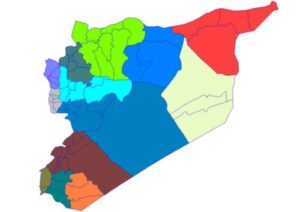
Against this backdrop, and with the Druze openly demanding the right to “self-determination” in Sweida, the options before the Syrian president are narrowing rapidly. Clearly, Syria today is far from achieving unification under a centralized security grip in Damascus. Even Al-Sharaa himself recently admitted that unity cannot be achieved through bloodshed or military force—yet no tangible steps have been taken to bridge divides or foster genuine partnerships among the country’s communities.
Thus, one solution remains for Ahmed Al-Sharaa if he is to preserve Syria’s unity and prevent its fragmentation: federalism. Though often feared by central authorities, federalism could realistically and effectively preserve what remains of Syria’s state fabric. It offers minorities genuine guarantees, enabling all communities to manage their local affairs within a unified state framework, thereby preventing secession and fragmentation.
The unity of Syria cannot be maintained through slogans or idealized speeches, but through a new governance model that reassures all Syrians and rebuilds trust across communities. Federalism—though painful or controversial for some—may today be the only viable path to saving the country and creating a future in which all groups coexist under a shared national roof.
The question remains: will Ahmed Al-Sharaa heed the call of logic and national interest, and pursue this path?
(Associated Medias) – Tutti i diritti sono riservati
L’articolo Nidal Shoukeir, “Federalism,” Ahmed Al-Sharaa and the Unity of Syria! proviene da Associated Medias.