by Fatima Abass
Washington is reportedly pushing a 14-point framework that would freeze Iran’s nuclear enrichment, ease sanctions and reopen the Strait of Hormuz, while Tehran says the plan is still under review
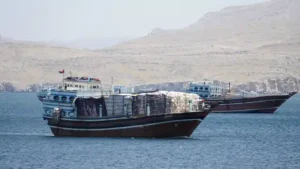 Iran is examining a US proposal aimed at ending the war, as President Donald Trump claimed the conflict could be “over quickly” and said there was broad understanding of his objective: preventing Tehran from acquiring a nuclear weapon.
The proposal, according to reports in US media, could form the basis of a preliminary memorandum of understanding between Washington and Tehran. Axios described the document as a one-page, 14-point framework designed to open the way to more detailed negotiations on Iran’s nuclear programme and regional security.
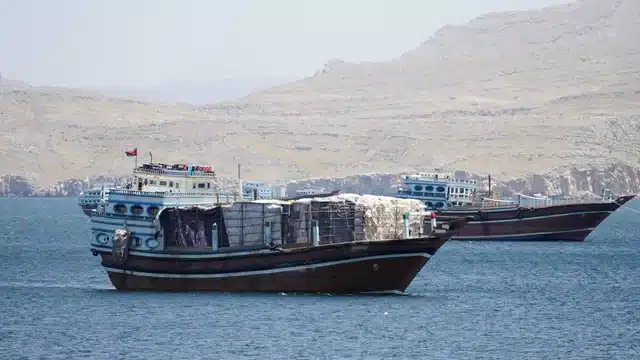
The reported terms include a suspension of Iranian uranium enrichment, the lifting of sanctions and the restoration of free passage through the Strait of Hormuz, the strategic waterway that has been effectively blocked since the US-Israeli offensive against Iran began earlier this year. None of the terms has been formally published.
Iran has not rejected the proposal outright. Foreign ministry spokesman Esmail Baghaei said Tehran was still reviewing the American plan and would communicate its response to Pakistani mediators once that assessment was complete. Pakistan’s foreign minister said Islamabad was trying to turn the current ceasefire into a permanent end to the war.
The tone from Tehran, however, remains cautious and combative. Ebrahim Rezaei, spokesman for the Iranian parliament’s national security and foreign policy commission, dismissed the reported proposal as a US “wish list”. Writing on X, he said Washington would not obtain through war what it had failed to secure in direct talks. He also warned that Iran remained ready to respond if the United States did not offer the concessions Tehran considers necessary.
Trump, speaking during a virtual campaign event with Republicans in Georgia, struck a far more optimistic note. He said the US had held “very good talks with Iran” over the previous 24 hours and suggested a deal was possible. He also repeated his claim that Iran had agreed never to possess a nuclear weapon, though Tehran has not publicly confirmed that.
The US president also kept pressure on Iran, warning on Truth Social that if Tehran did not agree to a deal, “the bombing starts” again, and at a much higher level than before. He said Operation Epic Fury, the initial US-Israeli campaign against Iran, would formally end if Iran accepted what had already been discussed. Secretary of State Marco Rubio had previously said the operation had achieved its objectives.
One of the most urgent points in any agreement is the Strait of Hormuz. Around a fifth of the world’s oil and liquefied natural gas normally passes through the route, making its closure a major threat to energy markets. Trump recently paused Project Freedom, a US plan intended to guide stranded ships out of the Gulf and help restore the flow of oil. Iran has not formally responded, though the Revolutionary Guard suggested the strait could reopen if what it called “the aggressors’ threats” came to an end.
The military situation remains volatile. US Central Command said it had fired on and disabled an Iranian-flagged oil tanker in the Gulf of Oman after it allegedly attempted to break a US blockade on Iranian ports. Washington says dozens of vessels have been stopped under the measure.
Israel, meanwhile, insists it is fully aligned with the United States. Prime Minister Benjamin Netanyahu said he and Trump were acting in “full coordination” and shared the same goal: removing enriched material from Iran and dismantling its enrichment capacity.
The conflict has also continued to spill into Lebanon. Israel launched its first strike on Beirut since an April ceasefire, saying it had targeted a senior Hezbollah commander responsible for attacks on Israeli communities and soldiers. Hezbollah, backed by Iran, began striking Israel in March in response to attacks on Iran. Despite the ceasefire, both sides have continued military operations while accusing each other of violations.
For now, diplomacy and threats are advancing in parallel. The US is presenting the reported framework as a possible route out of the war, Pakistan is trying to mediate, and Iran is weighing its response. But with the nuclear issue unresolved, the Strait of Hormuz only partially addressed and military operations still under way, any path to a durable agreement remains narrow.
(Associated Medias) – all rights reserved
L’articolo Iran weighs US peace proposal as Trump predicts swift end to war proviene da Associated Medias.