by Carlo Longo
The US secretary of state will meet the pontiff and Italian officials in an attempt to contain a diplomatic rift sparked by Washington’s pressure over the war with Iran
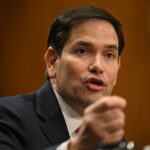
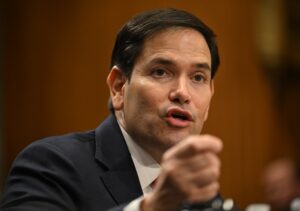 US secretary of state Marco Rubio is due to meet Pope Leo at the Vatican on Thursday, as Washington seeks to ease a growing diplomatic crisis caused by Donald Trump’s repeated attacks on the first North American pontiff.
Rubio is expected to hold talks with the pope at the Apostolic Palace before a separate round of meetings with the Italian government. The visit comes at a delicate moment for relations between the United States, the Holy See and Rome, all strained by the war in Iran and by Trump’s increasingly personal criticism of those who have refused to support it.
On Tuesday, Trump accused Pope Leo of backing nuclear weapons and of “endangering a lot of Catholics” because of his opposition to the conflict with Iran. The accusation followed earlier remarks in which the US president described the pope as “weak on crime” and “terrible on foreign policy”.
Leo responded on Wednesday by defending the church’s long-standing position against nuclear arms. “If anyone wants to criticise me for proclaiming the gospel, let them do so with the truth,” he said. “The church has spoken out against all nuclear weapons for years, there is no doubt about that. I simply hope to be listened to because of the value of God’s word.”
Rubio has tried to minimise the dispute. Speaking at the White House, he said Trump’s criticism should be understood in the context of the president’s determination to prevent Iran from acquiring a nuclear weapon, which Washington argues could threaten millions of Catholics and others around the world.
The secretary of state’s mission is widely seen as an attempt to repair damage caused by Trump’s remarks without openly contradicting the president. Analysts expect Rubio to defend the US rationale for military action against Iran while avoiding a direct confrontation with the Vatican’s moral opposition to nuclear weapons and war.
Relations between Washington and the Holy See have rarely appeared so tense. In April, Trump criticised Leo after the pope questioned the war in Iran. The president also claimed the pontiff had only been elected because Trump himself was in the White House, a remark that caused dismay in Vatican circles. He later shared, then deleted, an AI-generated image presenting himself as a Christ-like figure.
The Vatican has responded with caution, though not without irritation. Asked whether he placed greater confidence in Rubio or Trump, Cardinal Pietro Parolin, the Vatican secretary of state, said: “I count on no one. I count only on our Lord Jesus Christ.” He added that Trump’s attacks on Leo seemed “rather strange, to say the least”.
Rubio’s visit will also take him into another difficult relationship: that between Washington and the Italian government. He is scheduled to meet prime minister Giorgia Meloni on Friday, after Trump accused her in April of lacking courage for refusing to join the US campaign against Iran.
Meloni, once one of Trump’s strongest allies in Europe, has been pushed into a more cautious position. In Italy, criticism of the pope carries particular political weight, and Trump’s remarks have caused anger across much of the political spectrum. For Meloni, who had previously spoken warmly of Trump and even said she hoped he might one day receive the Nobel peace prize, the cost of remaining too close to him has risen sharply.
Lorenzo Castellani, a political historian at Luiss Guido Carli University in Rome, said the confrontation had forced Meloni to distance herself from the US president. Foreign policy, he argued, has become a central concern for Italian voters in a way not seen for decades, first because of Ukraine and now because of the Iran crisis.
The conflict has direct implications for Italy and Europe, from energy markets to military security. That makes it harder for Meloni to separate her international choices from domestic politics. According to Castellani, opposition to Trump’s position now stretches across both the Italian right and left, reaching a broad majority of the electorate.
Rubio’s talks in Rome are therefore expected to focus not only on diplomacy but also on strategic leverage. One issue likely to feature is the future of the roughly 13,000 US military personnel stationed across seven naval bases in Italy. Trump has already raised the possibility of withdrawing them, telling reporters last week that he would “probably” consider such a move because, in his words, “Italy has not been of any help to us.”
For Rubio, the challenge is narrow but significant: reassure the Vatican, pressure Italy, and defend a president whose rhetoric has inflamed two of Washington’s most sensitive relationships in Europe. The question is whether diplomacy can soften the damage, or whether Trump’s war with his allies will prove harder to manage than the one he says he is trying to end.
(Associated Medias) – all rights reserved
L’articolo Rubio heads to Vatican as Trump’s attacks on Pope Leo strain US ties with Rome proviene da Associated Medias.