by Jack Diffley
In a dramatic break from American tradition, former President Donald Trump positions the military as a tool to combat so-called “enemies within,” blurring lines between national defense and internal policing.
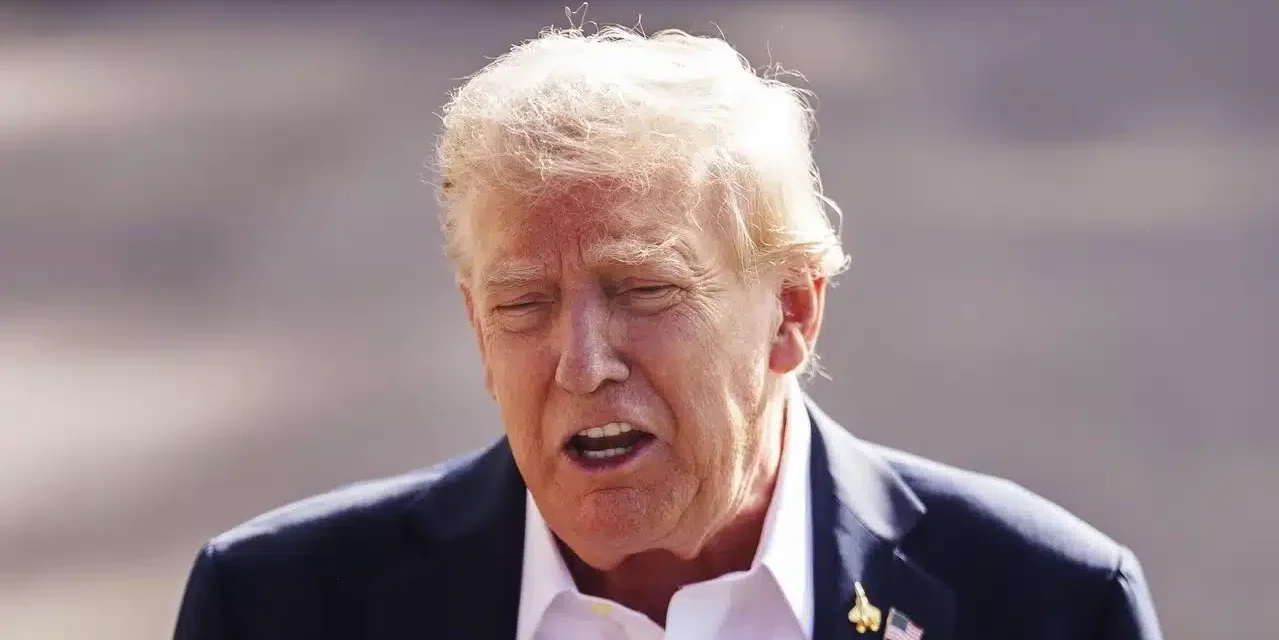
 At the heart of a striking address delivered Tuesday at the Quantico Marine Corps Base in Virginia, former President Donald Trump unveiled a controversial vision of the U.S. military’s future role — not abroad, but at home.
Before an audience of more than 800 top-ranking military officials flown in from around the globe, Trump framed his return to power as a mandate to engage in a new kind of war: not against foreign threats, but against what he labeled “enemies within.” This phrase, left deliberately vague, appeared to encompass everyone from violent criminals to Democratic lawmakers.
“We’re under invasion from within,” Trump declared, emphasizing that these internal enemies are “more difficult” to confront than traditional foes “because they don’t wear uniforms.”
The speech, laden with militaristic rhetoric and historical references, marked an unprecedented moment in modern U.S. civil-military relations. Trump praised presidents like George Washington and Abraham Lincoln for deploying troops to maintain domestic order, suggesting he intends to follow suit. “Many of our leaders used the military to keep peace,” he said, “but now they say you aren’t allowed to use the military.”
Behind the message was a clear challenge to long-standing democratic norms. The Posse Comitatus Act of 1878 prohibits the use of the U.S. military for domestic law enforcement without explicit congressional approval. Trump, however, appears intent on circumventing this restriction, as seen in recent National Guard deployments to cities like Los Angeles, Washington D.C., Portland, and Memphis — often over the objections of local governments.
Adding fuel to the fire, Defense Secretary Pete Hegseth opened the event by announcing the end of “overbearing rules of engagement,” promising a military emboldened to “intimidate, demoralize, hunt and kill the enemies of our country.” Trump later extended that rhetoric to domestic contexts, telling troops to retaliate forcefully if provoked by protesters: “They spit, we hit,” he said.
This militarization of internal policy has alarmed civil rights groups and constitutional scholars alike. The ACLU issued a stark warning: “In cities across the country, the president’s federal deployments are already creating conflict where there is none and instilling profound fear in people who are simply trying to live their lives and exercise their constitutional rights.”
Trump’s adversaries argue that his speech confirms long-standing concerns about authoritarian tendencies and a willingness to use the military to suppress dissent. His offhand remark — “If you don’t like what I’m saying, you can leave the room. Of course, there goes your rank, there goes your future” — drew laughter from the brass, but for critics, it underscored the dangerous conflation of loyalty to the president with loyalty to the nation.
A recent New York Times/Siena poll reflects the deep divisions in public opinion. While 42% of voters said they were more worried about crime in Democrat-led cities, a slight majority — 51% — expressed greater concern over Trump’s use of the National Guard to intimidate political opponents.
As the 2026 campaign season heats up, Trump’s military doctrine signals a profound shift in how the next administration could wield power. Whether it resonates with the broader public — or backfires as a constitutional crisis in the making — remains to be seen.
(Associated Medias) – all rights reserved
L’articolo Trump Recasts U.S. Military as Domestic Force in Alarming Shift at Quantico proviene da Associated Medias.