by Velia Iacovino
Beyond the declared outlines of Trump’s plan and its political details, Palestinians must confront themselves honestly and answer three essential questions about their past, their present, and their future
By Dr. Nidal Shoukeir (Professor of Strategic Communications and Governmental Relations)
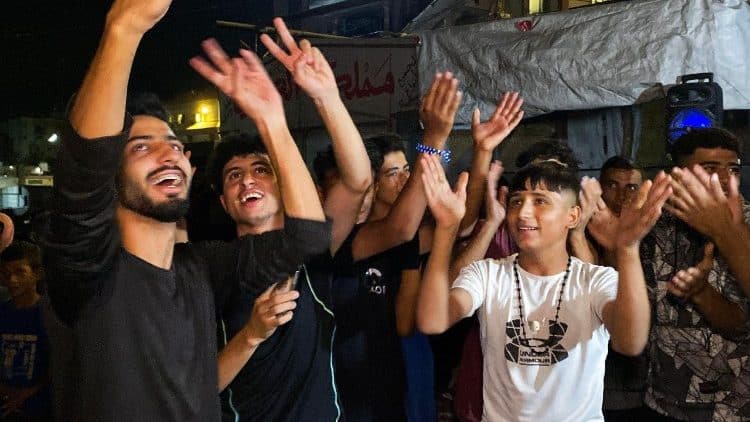
 The world has finally breathed a sigh of relief — for the first time in two years — after U.S. President Donald Trump announced the first phase of his plan for the Gaza Strip. The declaration, which includes a ceasefire and a prisoner exchange between the two sides, spread long-lost joy through Gaza’s sorrowful streets and brought a wave of relief to many Israelis, especially to the families of those held by Hamas.
On the international stage, cities across the Arab and Islamic worlds also welcomed the news, as official statements of support poured in from all directions. Regional and global powers now hope this agreement will pave the way toward ending a devastating war — or, more precisely, toward closing the gates of hell that opened two years ago, with the outbreak of the October 7, 2023 attacks.
Yet now, after the brief euphoria of celebration and the fragile birth of hope for Gaza’s people, Palestinians must return to the harsh and complicated reality they face — as a people, as a cause, and as a territory exhausted by two years of war and blockade. At this delicate juncture, a sincere and courageous national reflection is urgently needed — one stripped of illusions and populist slogans — to answer the essential question that imposes itself today: What comes after the “ceasefire” between Hamas and Israel?
Revisiting the Past: A Necessity, Not a Choice
Beyond the declared outlines of Trump’s plan and its political details, Palestinians must confront themselves honestly and answer three essential questions about their past, their present, and their future:
Are they satisfied with nearly eighty years of struggle with Israel? Are they satisfied with the outcomes of this struggle? And are they content with their current condition — as a people and as a cause — after eight decades of sacrifice, division, and repeated wars?
Revisiting the past, before the ink of this agreement dries, is a vital step for anyone who seeks to change the present and shape the future. There are tons of failures, contradictions, and impulsive decisions that have shaped today’s bleak reality — the latest being the October 7 attacks.
Can any rational Palestinian say — truthfully — what this attack has achieved other than death, destruction, and a deeper distance from the dream of a Palestinian state? How can a decision that claimed tens of thousands of innocent lives, displaced and starved hundreds of thousands, and destroyed an entire territory be described as a “victory”? And can the remaining Hamas leadership honestly explain what this operation has brought to their people — or to themselves?
These painful questions are not meant to reopen the wounds of accountability — history will take care of that — but to determine the new direction of Palestinian hopes. At this stage, Palestinians can no longer avoid taking a clear and honest stance on what Hamas did on October 7 — and calling things by their real names, without embellishment or denial.
The Defining Moment: Between the Reality of the Present and the Hopes of the Future
As for the present, equally profound questions arise: Do Palestinians wish to continue along the old path, or begin a new and different one? Do they truly want a lasting peace, or merely a temporary truce that will lead to yet another cycle of bloodshed and madness? And do they really want Hamas to remain in power after all the killing, destruction, and displacement of the past two years?
Today, as the “festival of madness” that the Israeli army orchestrated for two years finally pauses, Palestinians must realize that the opportunity before them may not come again — just as so many historic opportunities were lost before. The present moment, despite its pain and devastation, may well be the last chance to rebuild the Palestinian self on new foundations of realism and political rationality.
This moment is not only about signing Trump’s plan, but about genuinely believing in the steps being taken — seeing them as a real path toward building a viable and sustainable Palestinian state. There is no room for the residues of the past in today’s decisions, for the choices made now will shape the contours of tomorrow, and the convictions embraced today will lay the foundations of the future.
The Last Chance to Build a New Palestine
As for the future, the questions are many — and they waver between fear and hope. What is the future of the Palestinian individual? What is the future of the Palestinian cause, which has endured more than any other in modern times? And can this agreement mark the beginning of a genuine and lasting peace — one that rebuilds Gaza and restores to Palestinians their right to live in dignity?
Yes, today’s reality is harsh and bitter, and fear of the future is both understandable and justified. Yet history is unforgiving to those who hesitate. The choices made by the Palestinian people today will define whether the coming century is one of continued conflict — or of peace. More than ever, Palestinians must place the mistakes of the past at the heart of their present reflection, to chart a clear path toward tomorrow.
It should also be remembered that this time, Trump’s plan was not signed in ink, but written in the blood of tens of thousands of innocents — blood that clearly calls for change and demands a different tomorrow. The Palestine of the future must be a state of reason and realism — one that understands that the path to life is carved by wisdom, not recklessness; by will, not slogans.
Of course, achieving peace in the Middle East remains a long and arduous journey. But there are Arab, regional, and international forces working diligently to ensure that President Trump’s plan proceeds smoothly and without delay through its next phases. This is crucial — especially after the successful implementation of the first stage of the agreement. Yet, above all, the most decisive steps will be those taken by the Palestinians themselves — for only they can define the present and shape the future of their homeland.
(Associated Medias) – Tutti i diritti sono riservati
L’articolo Nidal Shoukeir, “What Comes After the “Ceasefire” Between Hamas and Israel?” proviene da Associated Medias.