by Velia Iacovino
With the outbreak of the so-called “Arab Spring” and the collapse of political Islam in several Arab countries—especially after the ousting of the Brotherhood government in Egypt in 2013—the group entered a new phase.
By Dr. Nidal Shoukeir (Professor of Strategic Communications and Governmental Relations)
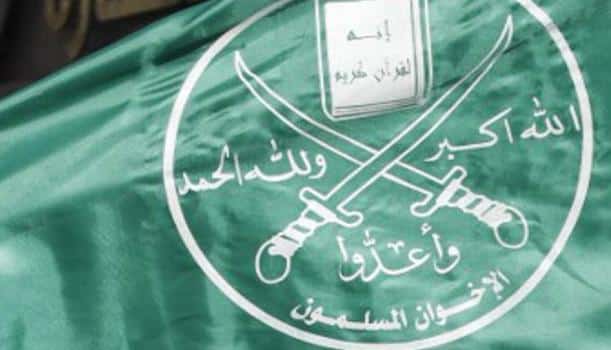
Recently, there has been growing discussion about the entrenched presence of the Muslim Brotherhood in several European countries. This discussion is not baseless; it is primarily grounded in a series of official and security reports warning about the implications of this presence on European societies, their institutional cohesion, and shared values.
This debate has gained further urgency as evidence indicates that the Brotherhood is not limited to mere religious or social activities within the continent. Rather, it operates according to long-term strategies aimed at influencing political, educational, and media spaces, leveraging the climate of public freedoms, and sometimes the leniency of legal and democratic frameworks in certain European countries.
One of the most notable documents in this context is the report issued by the French Ministry of the Interior in May, which directly warned of the risks posed by certain Brotherhood networks to the French state, republican values, and the principle of secularism. The report highlighted a dual narrative employed by these networks: outwardly demonstrating compliance with laws and social integration, while covertly building parallel structures to exert societal and political influence over the long term.
- From Political Asylum to Organized Establishment
The presence of the Muslim Brotherhood in Europe cannot be reduced to a single framework; it is diverse and multifaceted, encompassing commercial institutions, charitable organizations, educational bodies, cultural centers, and religious establishments. This organized presence dates back to the 1960s and expanded steadily during later stages, especially during periods when the Brotherhood faced bans or restrictions in several Arab countries following attempts to destabilize state security.
Initially, the European trajectory of the Brotherhood appeared natural, primarily through the gateway of political asylum. Several European countries provided legal protection to Brotherhood leaders persecuted politically or legally in their home countries, driven by humanitarian motives that defended freedoms and human rights while granting a legal umbrella to groups classified at the time as “politically oppressed.”
Over time, however, this reality began to shift. As a significant number of leaders and supporters settled in Europe, alongside large Muslim communities not necessarily aligned with political or organizational ideologies, and with the generous freedoms afforded by European societies—freedom of movement, relatively lenient laws regarding expression and associations, and weak oversight on funding and discourse—this presence transformed from a temporary refuge into a deliberate strategic choice.
- Europe as a Platform for Strategic Repositioning after the Fall of Political Islam
Under these conditions, the Muslim Brotherhood found in Europe everything necessary to establish a supportive and stable environment: a protective legal framework, an open democratic space, communities susceptible to influence, and institutions that could be penetrated or utilized over the long term. Europe thus became not just a temporary escape, but a space of legal protection and organizational stability, a center for network management, discourse shaping, and indirect influence over policies and societies.
While Arab countries were until recently the main arena for the Brotherhood’s operations, the qualitative shift caused by migration and organizational expansion in Europe transformed the continent into a global hub for the group, not merely a regional sphere. London, in particular, has been described by researchers and analysts as the unofficial capital of the Muslim Brotherhood, due to its flexible legal environment, international media presence, complex financial and institutional networks, and its capacity to manage transnational networks and shape narratives for Western audiences.
With the outbreak of the so-called “Arab Spring” and the collapse of political Islam in several Arab countries—especially after the ousting of the Brotherhood government in Egypt in 2013—the group entered a new phase. Faced with a major geopolitical loss in its traditional environment, it adopted a simultaneous tactical and strategic shift. Rather than using Europe merely as a rear base for support, funding, and media operations, it began transferring a core part of its activity into European spaces themselves, taking advantage of a legal and political reality unprepared to deal with transnational ideological organizations operating under a civil and religious guise.
III. From “Political Victim” to an Influential Actor in European Societies
At this stage, the Brotherhood no longer acted solely as a “political victim,” but as an organized actor of influence seeking to reproduce itself within European societies. Europe transformed from a mere legal haven into a primary operational arena, from a space of protection into a platform for long-term structural influence.
Concurrently, in recent years, several European countries—including France, Germany, and Austria—have begun reconsidering their approach toward the Muslim Brotherhood after uncovering its connections with extremist networks, covert influence operations within communities, and attempts to build parallel societies. These states gradually recognized that the issue is not about religiosity or freedom of belief, but an ideological-political project exploiting democratic values to reproduce exclusionary narratives and structures.
Several Arab countries, particularly Saudi Arabia and the United Arab Emirates, had previously banned the Brotherhood, labeling it a radical, divisive political organization and repeatedly warning the West and Europe about its potential impact. The warnings of UAE Foreign Minister Sheikh Abdullah bin Zayed in 2017 regarding the influence of political Islam in Europe remain resonant today.
Today, with many facts uncovered, European countries face a critical test in dealing with the Muslim Brotherhood. The matter is no longer linked solely to freedom of belief or religious practice, but to an ideological-political project exploiting democratic spaces to build long-term influence and parallel structures within societies.
The Brotherhood has successfully turned Europe into a functional “safe haven”, taking advantage of goodwill, legal loopholes, and a lack of accurate understanding of its long-term objectives. The coming years will reveal whether Europe can correct this course and safeguard its value-based and institutional model without compromising freedoms or falling into overgeneralization and polarization.
Will European countries succeed in this challenge?
(Associated Medias) – Tutti i diritti sono riservati
L’articolo Nidal Shoukeir, How the “Muslim Brotherhood” turned Europe into a “Safe Haven”? proviene da Associated Medias.