by Jack Diffley
From missile defense to rare earths, Greenland has become a strategic prize in an era of Arctic competition.
 Greenland, the world’s largest island and home to fewer than 60,000 people, has once again moved from the margins of global politics to its very center. U.S. President Donald Trump has revived and intensified his long-standing interest in taking control of the self-governing Danish territory, framing it explicitly as a matter of national security.
“We need Greenland from the standpoint of national security,” Trump told reporters aboard Air Force One, describing the island as “so strategic” and warning of an expanding Russian and Chinese presence in the surrounding waters. His remarks, made shortly after a controversial U.S. military operation in Venezuela, immediately reverberated across Europe. Denmark responded sharply, cautioning that any American attempt to seize Greenland would fundamentally undermine NATO and the transatlantic alliance.
Despite the backlash, the White House has shown no sign of retreat. Officials confirmed that Trump and his advisers are considering “a range of options” to bring Greenland under U.S. control, including the possible use of military force. The language marks one of the most explicit challenges in decades to the postwar norms governing sovereignty among Western allies.
At the core of Trump’s argument is geography. Positioned between North America and Russia, Greenland has long been regarded as a linchpin of Arctic security. During the Cold War, the island was a critical part of U.S. early-warning systems against Soviet missiles. That logic, many analysts argue, has returned with renewed urgency as relations with Moscow and Beijing deteriorate.
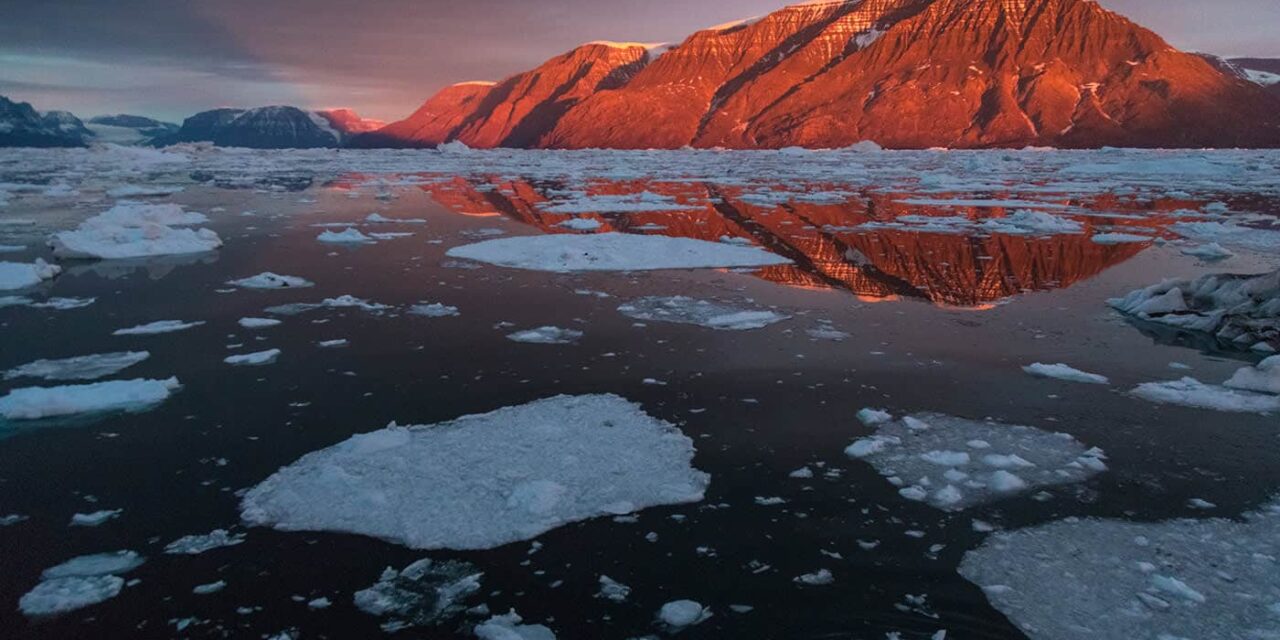
Greenland also sits near emerging Arctic shipping routes that are becoming more viable as climate change accelerates the melting of polar ice. The Northwest Passage and the Transpolar Sea Route could dramatically shorten travel times between Asia and Europe compared with traditional routes such as the Suez Canal. Control over territory adjacent to these corridors offers both economic leverage and strategic oversight, blurring the line between commercial opportunity and military necessity.
Equally important is Greenland’s position along the GIUK gap — the naval choke point between Greenland, Iceland and the United Kingdom that connects the Arctic Ocean to the North Atlantic. Monitoring this corridor has historically been central to tracking Russian submarine movements, and it remains a key feature of NATO’s defensive architecture.
Beyond geography, Greenland’s natural resources add another layer to Washington’s interest. The island is believed to hold significant reserves of oil, gas, critical minerals and rare earth elements — materials essential for advanced technologies, renewable energy systems, electric vehicles and modern weapons platforms. As China has repeatedly demonstrated its willingness to use its dominance in rare earth supply chains as geopolitical leverage, access to alternative sources has become a strategic priority for the United States.
“Trump is a real estate guy,” Clayton Allen of the Eurasia Group has observed. “Greenland is sitting on some of the most valuable real estate in terms of economic advantage and strategic defense for the next three to five decades.” In this view, the island represents not just territory, but long-term leverage in an era defined by technological rivalry and resource competition.
The United States already maintains a foothold in Greenland through the Pituffik Space Base — formerly Thule Air Base — in the island’s northwest. Today, roughly 150 U.S. personnel are stationed there, a fraction of the nearly 6,000 troops deployed during the Cold War. The base hosts an early-warning radar system, an active airfield and the world’s northernmost deep-water port, making it a cornerstone of Arctic surveillance.
According to security experts, Greenland’s value is growing rather than diminishing. In addition to monitoring missile trajectories over the North Pole, the island could serve as a platform for expanded missile defense systems. This possibility is closely tied to one of the Trump administration’s flagship defense initiatives: the so-called “Golden Dome,” a multibillion-dollar missile shield intended to protect the United States from a broad range of ballistic and hypersonic threats.
“The U.S. needs access to the Arctic, and it doesn’t really have that much direct access today,” Allen said. “Greenland provides that. If you want air defenses deployed closer to Russia to counter next-generation weapons, Greenland is central to that vision.” In this framework, the island becomes a forward line of defense rather than a peripheral outpost.
Still, Trump’s insistence that full control over Greenland is essential has raised questions among allies and analysts alike. Opinion polls consistently show that Greenlanders overwhelmingly oppose becoming part of the United States, even as many favor eventual independence from Denmark. European leaders have also warned that coercive moves would fracture the very alliances the U.S. relies on for its global security posture.
Critics argue that Washington already enjoys extensive access through existing agreements with Copenhagen and that a military takeover would be unnecessary and destabilizing. During the Cold War, the U.S. expanded and reduced its presence on Greenland without annexation, adjusting force levels as strategic needs evolved.
What has changed, however, is the broader context. The Arctic is no longer a frozen buffer but an emerging arena of competition, where climate change, military technology and global trade intersect. In that environment, Greenland has become a symbol of a deeper shift: from cooperative security toward open contest over geography, resources and influence.
Whether Trump’s ambitions translate into concrete action remains uncertain. What is clear is that Greenland now sits at the center of a debate about how far the United States is willing to go to secure its strategic future — and how much strain the transatlantic relationship can bear in the process.
(Associated Medias) – all rights reserved
L’articolo Why Trump Wants Greenland: The Arctic Island at the Heart of U.S. National Security proviene da Associated Medias.