by Aisha Harrison
Two years after the initiative’s official launch in Rome in January 2024, a new crucial stage of assessment and relaunch is opening.
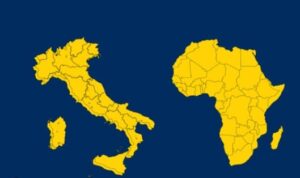 Italy is taking a further step in building a structured and equal partnership with the African continent. Tomorrow, 13 February 2026, the second Italy–Africa Summit at the level of Heads of State and Government will be held in Addis Ababa, Ethiopia, within the framework of the Mattei Plan for Africa. The announcement, anticipated by Prime Minister Giorgia Meloni during her New Year press conference, marks both a symbolic and political turning point: for the first time, the Summit is being held in Africa rather than in Europe.
The choice of Addis Ababa is no coincidence. The Ethiopian capital, the seat of the African Union, is hosting the Italy–Africa Summit in conjunction with the AU Summit, on the eve of the Assembly of Heads of State and Government of the African Union. A diplomatic alignment that strengthens the multilateral value of the initiative and places Italy at the center of direct dialogue with Africa’s continental institutions. In this context, Giorgia Meloni will speak as guest of honor at the opening plenary session of the African Union Assembly, scheduled for the morning of Saturday, 14 February.
Two years after the official launch of the Mattei Plan, the Addis Ababa Summit therefore represents a decisive moment of assessment and renewed momentum. The stated objective remains that of moving beyond the episodic or emergency-driven approaches that have characterized Euro-African relations for decades, in order instead to build a stable political and economic partnership grounded in mutual interests, shared responsibility, and joint development.
The Mattei Plan — named after Enrico Mattei, a symbolic figure of an Italian energy and international policy rooted in cooperation — identifies several priority strategic pillars: sustainable development, infrastructure, energy, education and training, healthcare, and agriculture. These sectors are considered crucial not only for the growth of African economies, but also for regional stability and for addressing major global challenges such as the energy transition, food security, and migration flows.
During the Summit, Italy will present an assessment of the initiatives already launched: system missions involving institutions, businesses, and universities; joint projects in the fields of energy and infrastructure; training programs and healthcare cooperation; and a strengthening of bilateral and multilateral political dialogue. At the same time, Addis Ababa will serve as the venue for defining, together with African partners, operational priorities for the coming years, tailoring interventions to the needs expressed by the countries involved.
From a political standpoint, the Summit takes place within an international context marked by growing geopolitical competition in Africa, where global actors such as China, Russia, the United States, and Gulf countries have intensified their presence. Italy aims to distinguish itself by advocating an approach free of neo-colonial logic and oriented toward enhancing local expertise, African production chains, and long-term sustainability.
No less significant is the European dimension. While remaining a national initiative, the Mattei Plan aspires to serve as a model and platform for broader European Union involvement. In this sense, the Italy–Africa Summit also represents a testing ground for aligning national policies with EU strategies toward the continent.
(Associated Medias) – Tutti i diritti sono riservati
L’articolo Mattei Plan, second Italy–Africa Summit on 13 February in Addis Ababa proviene da Associated Medias.