by Redazione
Gulf capitals, led by Abu Dhabi, have played a pivotal role in encouraging the U.S. to negotiate with Tehran. Despite their often fraught relations with Iran, Gulf states have used both direct and indirect diplomatic channels to contain tensions, prioritise stability, and shield the region from the fallout of ill-considered adventures.
By Dr. Nidal Shoukeir
Professor of Strategic Communications and Governmental Relations
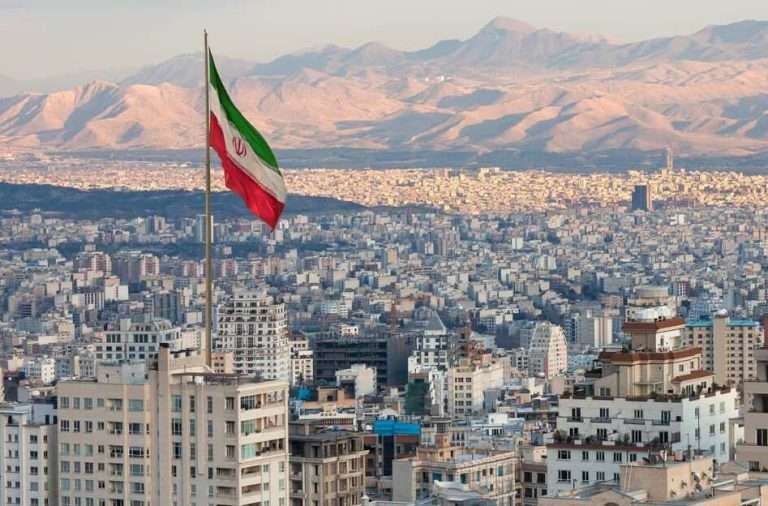
The Islamic Republic of Iran stands today at a highly sensitive crossroads, amid unprecedented political and media speculation about an imminent U.S. strike that could reshape the regional order. Between intelligence leaks, visible military movements, and tense statements from global capitals, the region seems to be counting down to a moment when the question is no longer if a confrontation will occur, but when, and in what form.
In this charged environment, Tehran finds itself trapped between escalating external pressures led by the United States, and mounting domestic challenges—where any misstep could trigger a confrontation spilling beyond its borders, leaving the country figuratively on a hot plate.
Negotiations under Pressure: Buying Time or Seeking a Settlement?
Tehran had pinned its hopes on talks with Washington to reach a new agreement that could avert the shadow of war. Yet, after two rounds without any meaningful progress, the possibility of a military option being considered has grown, or at least remains a serious consideration.
Despite their importance, these negotiations face significant obstacles. Iran approaches the table under intense U.S. pressure and growing political and security momentum toward confrontation. Rather than treating negotiations as a platform for political realism, Tehran appears to see its mere participation as a concession.
Behind the scenes, Iran is manoeuvring by segmenting issues and isolating them, attempting to reduce pressure while buying time. It continues to reject major concessions—on its nuclear programme, ballistic missile programme, or regional influence—maintaining a dual strategy of public defiance and private gestures of appeasement. Yet this duality no longer convinces Washington or its allies, who increasingly see Iran’s approach as a tactic to stall rather than a serious path to resolution.
Washington and the Red Lines
The United States, meanwhile, is unwilling to make free concessions, especially with elections looming and the Iranian issue becoming a domestic political lever. Any perceived softness could be read as weakness, even as calls for a firm response grow in Congress and security institutions.
President Donald Trump’s administration cannot accept a new deal resembling the 2015 agreement, which the U.S. withdrew from in 2018. Today, Washington’s red lines are clear and non-negotiable: no nuclear weapons, no armed Iranian proxies in the region, and no ballistic missiles threatening the security of regional states, particularly Israel.
The Gulf: A Regional Safety Valve
Gulf capitals, led by Abu Dhabi, have played a pivotal role in encouraging the U.S. to negotiate with Tehran. Despite their often fraught relations with Iran, Gulf states have used both direct and indirect diplomatic channels to contain tensions, prioritise stability, and shield the region from the fallout of ill-considered adventures.
Without Gulf diplomacy, these negotiations may not even exist. Their efforts reflect a conviction that regional security cannot rely on perpetual confrontation, but on respecting sovereignty, avoiding the export of crises, and adhering to the principles of neighbourly conduct. These states remain among the few genuinely committed to maintaining regional stability through pragmatic policies rather than rhetoric.
The region now faces a new landscape, shaped in the aftermath of October 7, built on the ruins of the so-called “Resistance Axis” following Hamas’s defeat in Gaza, Hezbollah’s weakening in Lebanon, and the fall of Bashar al-Assad’s regime in Syria.
The Ball in Tehran’s Court
Iranian leaders must understand that the post-October 7 environment is radically different. The new reality demands either a fundamentally new Iran, or at the very least, new Iranian behaviour far removed from past patterns.
Today, Tehran’s options are stark: accept a painful settlement involving real concessions on nuclear, missile, and regional issues—a choice that clashes with regime ideology and internal concerns—or reject it, escalate tensions, and attempt to impose a new deterrence equation, resolving the conflict militarily based on endurance and capacity.
As the French saying goes, “The worst kind of blindness is refusing to see.” Everyone today can perceive U.S. intentions clearly, whether through negotiation or overwhelming force. In moments of major transformation, states are judged not on past actions, but on their ability to adapt to new realities.
The ball is now in Tehran’s court. Will Iran choose the path of political realism… or continue walking on a razor’s edge until the moment of explosion?
(Associated Medias) – Tutti i diritti sono riservati
L’articolo Nidal Shoukeir, “Iran” on a razor’s edge! proviene da Associated Medias.