by Janice McAllister
A rare deployment of advanced American F-22 fighters to Israel, alongside a growing U.S. naval presence in the Mediterranean, heightens speculation of possible military action against Iran, even as Tehran signals openness to renewed nuclear talks
 Twelve U.S. F-22 Raptor stealth fighter jets landed in Israel on Tuesday in an unusual and highly symbolic move, underscoring mounting tensions between Washington and Tehran as the prospect of a strike on Iran looms.
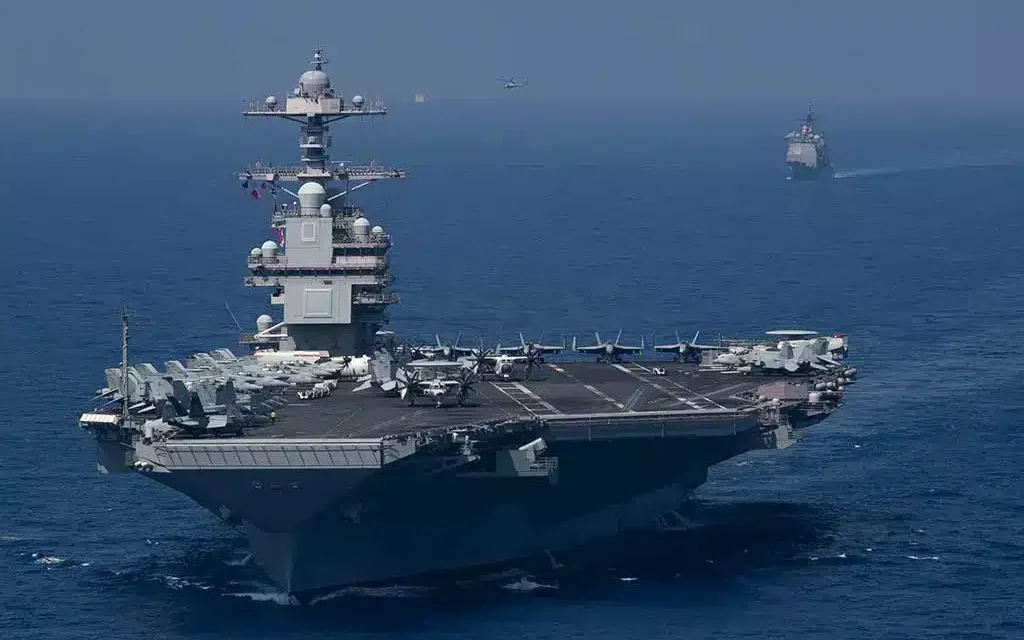
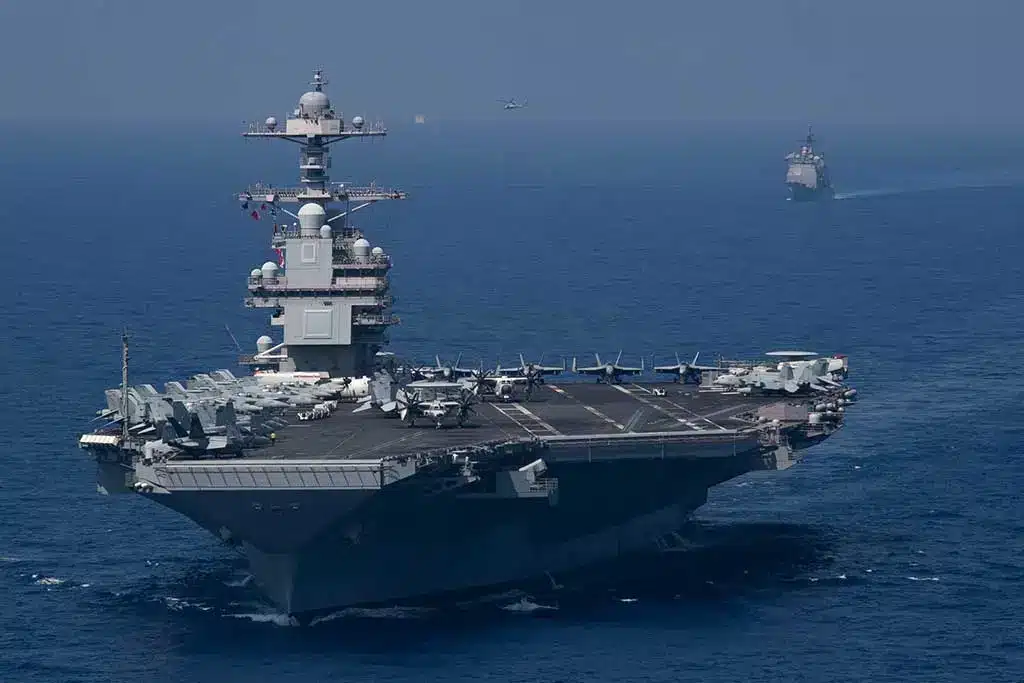
The deployment forms part of a broader American military buildup in the region. The aircraft carrier USS Gerald R. Ford is operating in the eastern Mediterranean and is expected to join the USS Abraham Lincoln, already stationed nearby. Together, the two carrier strike groups represent one of the most significant U.S. force concentrations in the area in recent years.
The arrival of F-22s — among the most advanced air superiority fighters in the U.S. arsenal — is particularly notable. Unlike the F-35, which Israel operates, the F-22 has never been exported due to U.S. legal restrictions. Designed primarily for air dominance but also capable of ground attack and intelligence missions, the aircraft has seen limited combat use since entering service, including strikes against Islamic State targets and the downing of a Chinese surveillance balloon in 2023.
The military movements come ahead of President Donald Trump’s State of the Union address and amid renewed diplomatic efforts over Iran’s nuclear program. Iranian Foreign Minister Abbas Araghchi indicated that negotiations with the United States would resume in Geneva, describing a potential agreement as “within reach” if diplomacy is prioritized.
“Iran will under no circumstances ever develop a nuclear weapon,” Araghchi said, reiterating Tehran’s longstanding position that its nuclear program is intended for peaceful purposes. At the same time, he warned that Iran would firmly defend its sovereignty and that any military action would have far-reaching regional consequences.
Deputy Foreign Minister Majid Takht-Ravanchi echoed that stance, stating that while Tehran is ready “at any moment” to reach an agreement, launching a war would be “a real gamble.” “Starting a war is possible,” he said, “but ending it is not easy.”
In Washington, the White House maintained that diplomacy remains the preferred option. Press secretary Karoline Leavitt said President Trump’s “first option is always diplomacy,” but added that he is prepared to use military force if necessary. Secretary of State Marco Rubio, who is also serving as national security adviser, is scheduled to brief senior congressional leaders on the situation.
Israeli officials have suggested that an immediate strike is unlikely before the weekend, citing upcoming high-level visits, including that of Indian Prime Minister Narendra Modi. Nonetheless, the prevailing assessment in Jerusalem remains that military action could follow if Iran fails to meet U.S. demands within a timeframe Trump recently described as “10 to 15 days.”
Analysts note that while the show of force increases pressure on Tehran, it also raises the stakes. Any confrontation could draw in U.S. regional allies and disrupt global energy markets. Oil prices have already reacted to the heightened uncertainty.
As warships maneuver in the Mediterranean and stealth jets take position in Israel, the balance between coercive diplomacy and open conflict appears increasingly delicate — with both sides publicly holding the door open to talks, even as they prepare for less peaceful outcomes.
(Associated Medias) – all rights reserved
L’articolo Twelve U.S. F-22 Stealth Jets Arrive in Israel as Tensions with Iran Escalate proviene da Associated Medias.