by Michael Scurry
Explosions struck the Palm Jumeirah and fires broke out at the Burj Al Arab, Dubai airport and Jebel Ali port as the UAE said it intercepted most of a large Iranian barrage launched in retaliation for US and Israeli attacks
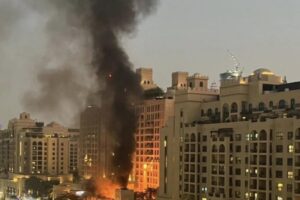 A wave of Iranian missiles and drones struck the United Arab Emirates on Saturday, February 28, jolting Dubai’s most recognisable symbols of wealth and connectivity. Authorities said explosions hit the Palm Jumeirah development, while drone debris sparked fires at the Burj Al Arab luxury hotel and at key transport hubs, including Dubai International Airport and Jebel Ali port.
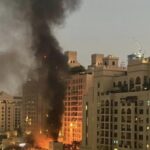
Witnesses on the Palm Jumeirah—a high-end, palm-shaped island packed with hotels and residences—described hearing a blast and seeing smoke rising from a five-star property. Dubai’s media office confirmed an “incident” at a building on the Palm caused a fire and injured four people. Later, a second explosion was reported near the same site after what appeared to be a drone falling from above, according to another witness account.
The Burj Al Arab, the sail-shaped hotel often marketed as ultra-luxury, was also affected after an intercepted drone reportedly broke apart and debris ignited a small blaze on the building’s exterior. The Dubai Media Office said the fire was quickly brought under control and that there were no injuries. An AFP journalist reported a visible police presence at the hotel’s entrance, with access restricted.
Dubai International Airport—one of the world’s busiest for international travel—sustained what its governing body described as minor damage to a concourse, and four staff were reported wounded. With UAE airspace already closed, most passengers had left the terminal complex by the time details emerged. In Abu Dhabi, authorities said an incident at Zayed International Airport killed one person and injured seven.
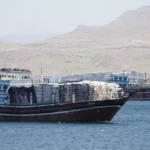
Jebel Ali port, another pillar of Dubai’s economy and a facility capable of handling aircraft carriers, was also hit indirectly. Officials said falling debris from an interception triggered a fire, and civil defence crews were working to fully extinguish it.
The UAE said Iran fired 137 missiles and 209 drones at its territory, with the majority intercepted by air defence systems. The attacks marked an unprecedented strike on Dubai’s marquee revenue generators—its airport and seaport—assets that officials estimate account for around 60% of the emirate’s revenues and underpin the city’s carefully maintained image as a global hub for tourism, trade and luxury.
According to the report, Iran’s barrage targeted all Gulf states rich in oil and gas except Oman, which has played a mediating role in US-Iran talks. The strikes were described as retaliation for ongoing US and Israeli attacks, extending the conflict’s reach into the Gulf’s commercial heartlands and raising fresh questions about security for aviation, shipping and the region’s expatriate-heavy cities.
(Associated Medias) – all rights reserved
L’articolo Iranian Missiles and Drones Hit Dubai Landmarks, Damaging Hotels, Airport and Port proviene da Associated Medias.