by Jack Diffley
Israel strikes infrastructure in Tehran while Iran threatens shipping in the Strait of Hormuz. Republicans in Washington stop a Senate measure that sought to curb President Trump’s military authority as the conflict spreads across the region
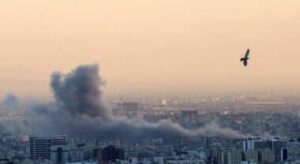 The conflict between Iran, Israel and the United States intensified on Thursday as Tehran launched a new wave of missiles toward Israeli territory, sending millions of civilians into bomb shelters across the country. Israel responded with large-scale air strikes on Tehran, saying the attacks targeted infrastructure linked to Iranian state authorities.
The war between Washington and Tehran has now entered its sixth day, with its repercussions spreading well beyond the Gulf region. Financial markets have been shaken, commercial transport has been disrupted and thousands of tourists and residents are attempting to leave the Middle East as governments organize emergency repatriation flights.
Tensions rose sharply after the sinking of an Iranian warship off the coast of Sri Lanka on Wednesday, an incident that Iranian officials described as a “maritime atrocity.” According to Tehran, the frigate Dena, which was said to be visiting the Indian navy and carrying nearly 130 sailors, was struck without warning in international waters. Iranian authorities reported that at least 80 people were killed.
Iran’s military leadership responded with strong warnings. General Kioumars Heydari of the Islamic Revolutionary Guard Corps declared on state television that Iran had decided to confront American forces “wherever they are,” adding that Tehran was prepared for a prolonged conflict.
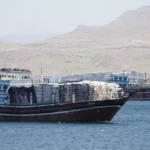
Later on Thursday, the Revolutionary Guards claimed they had struck a U.S. tanker in the northern Gulf, saying the vessel had caught fire. In the same statement, they warned that during wartime the passage of ships through the Strait of Hormuz — one of the world’s most critical oil and gas routes — would be under the control of the Islamic Republic.
The strategic waterway has already been severely affected. Shipping traffic remained largely paralyzed, with an estimated 200 vessels waiting off regional coastlines as oil prices continued to climb amid fears of supply disruptions.
Another development raised the prospect of a broader escalation. Turkey announced that NATO air defenses had intercepted an Iranian ballistic missile fired toward its territory on Wednesday. If confirmed, it would mark the first direct involvement of a NATO member bordering Asia in the Middle East conflict. Iranian military authorities, however, denied launching missiles at Turkey and said the country’s sovereignty was respected.
In Washington, political tensions accompanied the military escalation. Late on Wednesday, Republican senators blocked a motion that would have halted the U.S. air campaign against Iran and required congressional authorization for further military action. The vote effectively preserves President Donald Trump’s broad authority to continue directing the military operation.
Coordination between Washington and Tel Aviv also appeared firm. According to Israel’s defense ministry, U.S. Defense Secretary Pete Hegseth told Israeli Defense Minister Israel Katz in a phone call to “keep going until the end,” reaffirming American support for Israel’s campaign.
Meanwhile, the repeated strikes on Tehran have delayed the planned funeral for Iran’s Supreme Leader Ayatollah Ali Khamenei, who was killed in the initial phase of the conflict last weekend. His son, Mojtaba Khamenei, has emerged as a leading candidate to succeed him, a sign that Iran’s ruling establishment is attempting to maintain continuity despite mounting military pressure.
The war is already affecting the global economy. International Monetary Fund Managing Director Kristalina Georgieva warned that the conflict is testing the resilience of the global economic system. If the fighting continues, she said, it could significantly influence energy prices, market sentiment, economic growth and inflation.
Air travel across much of the Middle East has also been severely disrupted. Major hubs in the Gulf region, including Dubai — the world’s busiest airport for international passengers — have experienced widespread cancellations. Several governments have begun organizing repatriation flights for citizens stranded in the region, although schedules remain uncertain as the security situation continues to evolve.
(Associated Medias) – all rights reserved
L’articolo Iran Fires New Wave of Missiles at Israel as U.S. Senate Blocks Move to Halt Air Campaign proviene da Associated Medias.