by Janice McAllister
After the US moves against Nicolás Maduro and Ali Khamenei, China condemns the tactics—but avoids the risks. For Xi Jinping, keeping the US relationship stable may matter more than defending distant partners
 In the space of two months, Washington has moved aggressively against two leaders widely seen as close to Beijing: Venezuelan President Nicolás Maduro and Iran’s Supreme Leader Ali Khamenei. Maduro has been taken into US custody after a surprise operation in Caracas. Khamenei was killed in Tehran during a joint US mission with Israel.
China’s response has been sharp in tone but limited in action. Beijing has denounced what it portrays as violations of sovereignty and an apparent push for regime change, and it has publicly signaled continued friendship toward Iran. Yet beyond diplomatic outrage and messaging, China has largely stood aside while its main geopolitical rival reshapes the regional balance.
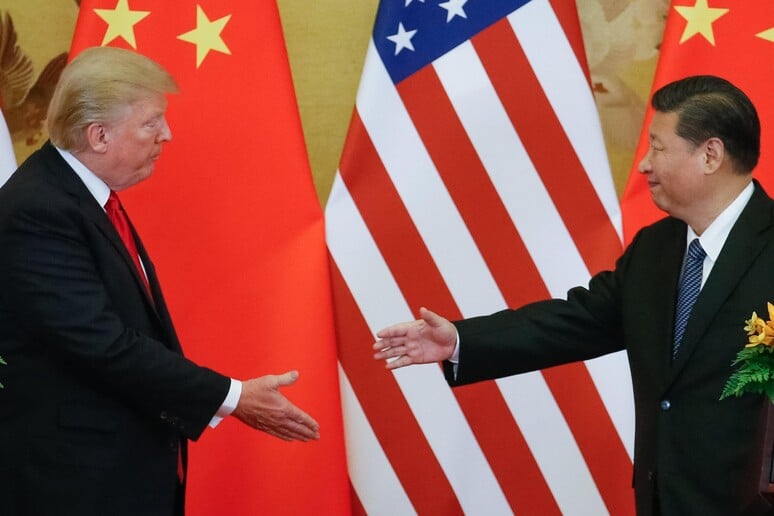
That restraint reflects a cold pragmatism from Chinese leader Xi Jinping. Iran, for all its symbolic value as a partner against US pressure, does not sit at the very top of Beijing’s priorities. Preserving stability in China’s relationship with the United States—especially ahead of a planned Trump-Xi summit in Beijing—appears to outweigh any appetite to escalate over Tehran. Some analysts also argue China may quietly benefit from American attention and military resources being pulled toward the Middle East rather than the Indo-Pacific.
China does have real ties to Iran. It is the biggest buyer of Iranian oil, has condemned US sanctions, and has helped expand Iran’s diplomatic breathing room by supporting its entry into Beijing-linked groupings. Chinese companies have also been accused of supplying dual-use materials and technology that support Iran’s security and missile infrastructure—claims Beijing rejects or frames as lawful trade.
But China has repeatedly avoided acting like a security guarantor. It offers economic links and political cover, not battlefield commitments. The same pattern played out during earlier regional flare-ups: strong rhetoric, limited direct involvement. Beijing has cultivated relationships across the Middle East, including with Saudi Arabia and other Gulf states, and it has an interest in not being dragged into conflicts that could jeopardize energy flows or provoke a direct confrontation with Washington.
The muted reaction also raises uncomfortable questions for countries that see China as an alternative pole to the US. If Beijing won’t meaningfully back partners when they are under extreme pressure—especially those far from China’s borders—how reliable is it in a crisis? Even so, Iran is likely to keep leaning toward China because of its economic weight and its role as a major outlet for trade and oil sales.
For Beijing, the biggest risks are practical rather than ideological. Energy is the immediate pressure point: nearly all of Iran’s crude exports flow to China, feeding a supply chain that often involves smaller independent refineries and opaque shipping networks designed to reduce sanctions exposure. China has diversified its oil imports in recent years and holds large stockpiles, which could soften short-term shocks. But a broader regional war—or disruption in the Strait of Hormuz—would be far harder to absorb. The strait is a critical route for crude from multiple Gulf producers, and instability there would hit China’s import system far beyond Iranian barrels alone.
At the same time, the crisis offers Beijing a messaging opportunity. China can amplify its long-running argument that the US behaves as a hegemonic power that intervenes militarily, while China claims to stand for non-interference. Some Chinese thinkers present this as a feature, not a flaw: avoiding security guarantees reduces overreach and keeps China flexible. The downside is equally clear—when violence escalates, flexibility can look like passivity, and passivity can invite more risk-taking by rivals.
In the end, China’s posture is less about loyalty and more about leverage. Beijing will protest, posture at the UN, and keep economic links where it can—but it will be cautious about paying real costs for partners that are strategically distant. For Xi, the priority is not defending friends at all hazards; it’s protecting China’s room to maneuver in a world where the US still sets many of the rules.
(Associated Medias) – all rights reserved
L’articolo Beijing’s Quiet Calculus as Washington Strikes China’s Friends proviene da Associated Medias.