by Fatima Abass
As the supreme leader’s reported killing ends 36 years at the apex of the Islamic Republic, some Iranians take to the streets in grief—while others, scarred by January’s crackdown, mark the moment with fireworks, tears and cautious hope
 Iran woke to a jarring, contradictory scene after the death of Ayatollah Ali Khamenei: public mourning in central squares, and, elsewhere, bursts of jubilation captured in smartphone videos and shared at speed across social media. The opposing reactions—grief and celebration, fear and relief—offered a rare, unfiltered snapshot of a country split by decades of repression, loyalty, and trauma.
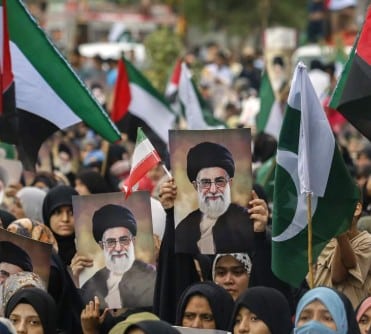
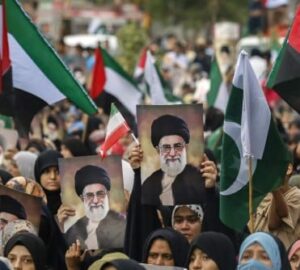
In Tehran, crowds gathered to mourn the leader who had ruled for 36 years, chanting and holding placards bearing his portrait. Footage from Enghelab Square showed mourners dressed in black, many visibly weeping, waving Iranian flags and repeating familiar slogans, including “death to America” and “death to Israel.” For those who saw Khamenei as the guardian of the Islamic Republic, his death was framed as martyrdom and as an assault by foreign powers that demanded vengeance.
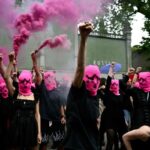
Yet the same news triggered very different scenes. Videos circulating online showed people dancing in streets, honking car horns and setting off fireworks. Some families watched from balconies, joining celebrations that, for many, carried the emotional weight of years—especially after the violent crackdown on nationwide protests in January. Those demonstrations, sparked by deep economic anger and political frustration, were met with deadly force, according to accounts from witnesses and human rights groups cited in the report.
Nazanin, a 24-year-old media professional in Tehran, described a street suddenly overflowing with people and said she cried as she watched. “No one outside can understand what Iranians who were victims of this murderer feel right now,” she said. For her, the news resonated with the memory of those killed during the “Women, Life, Freedom” movement—among them Nika Shakarami, Sarina Esmailzadeh and Mahsa Amini, whose deaths became symbols of resistance in 2022.
Others spoke in the language of raw vengeance. Mina, a 20-year-old university student in Tehran, said she had been among protesters struck by gunfire when security forces opened fire in January. She described seeing young people collapse in front of her—images she said she could not forget. When she heard Khamenei had died, she said, it felt like a wish for accountability had been granted, even if only symbolically and only for a moment.
A doctor in Rasht, still shaken by what he said was a month treating protesters with gunshot wounds, described celebrating quietly at home. He said he felt apprehensive about what comes next, but also relief—an emotion he suggested was widespread among those who believe the supreme leader embodied the system that brutalised them. “For now we celebrate,” he said, even as security forces remained present and heavily armed.
Across the country, the accounts described small, local rituals of release. In Arak, residents said people gathered in squares and offered tea to one another almost immediately after the news spread online. In Mashhad, Khamenei’s hometown, witnesses described students mounting motorbikes and riding through the streets in celebration.
But fear still threaded through both camps. Many Iranians, even those who despised the supreme leader, worried that the way he died—reported to be at the hands of foreign military force—could bring chaos, harsher repression, or a prolonged war. Atousa Mirzade, a teacher in Shiraz, said she could not find happiness in the killing of her country’s leader by outsiders, and voiced anxiety about what instability might mean for Iran, invoking Iraq as a warning.
Supporters, meanwhile, expressed grief and defiance. Hossein Dadbakhsh, a 21-year-old university student in Mashhad, said he was ready to sacrifice his life and promised that Israel and Trump would “pay a heavy price” for what he called the “martyrdom” of his leader.
For families who lost loved ones to the state, Khamenei’s death represented something else entirely: the first crack in a structure that had felt immovable. Mahsa Piraei, who lives outside Iran and whose mother was killed during the “Women, Life, Freedom” protests, called it the start of a new era—while acknowledging that the road ahead remains uncertain.
What emerges from these competing scenes is not a single national mood, but a collision of realities. For some, the end of Khamenei’s rule is a bereavement and a call to rally around the state. For others, it is a release after years of fear—celebrated cautiously, even privately—shadowed by the knowledge that the moment may be brief, and that what follows could be even more dangerous.
(Associated Medias) – all rights reserved
L’articolo Celebration and Mourning in Iran After Khamenei’s Death Exposes a Nation’s Deep Divide proviene da Associated Medias.