by Robert Crowe
As conflict in the Middle East drives up oil prices and threatens global growth, Beijing is stepping forward with a diplomatic initiative aimed at securing a ceasefire — but its influence may prove stronger in economics than in conflict resolution
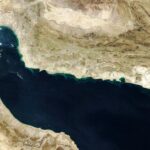
 As the war in the Middle East moves into its second month, China is attempting to position itself as a force for restraint, backing a new diplomatic push to help end the conflict and reopen the Strait of Hormuz. The effort reflects Beijing’s growing interest in presenting itself as a global mediator, but also underlines the limits of its power in a region where the United States still holds overwhelming military influence.
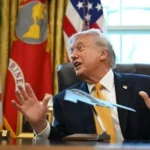
The initiative comes at a volatile moment. Donald Trump has said American military action in Iran could conclude within two to three weeks, though he has offered little clarity about how such an outcome might be achieved or what political order might follow. Into that uncertainty, China has joined Pakistan in promoting a five-point plan designed to encourage a ceasefire and restore movement through one of the world’s most important energy chokepoints.
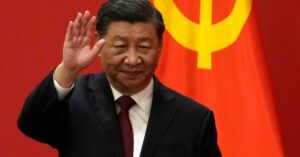
Pakistan has emerged as an unexpected intermediary in the conflict, and Chinese officials have now lent political and diplomatic weight to its efforts. Beijing’s support is significant not only because of its regional standing, but because it comes as China prepares for high-stakes talks between Xi Jinping and Trump next month. By endorsing diplomacy at this stage, Beijing is also drawing a contrast with Washington’s military-first approach.
China’s interest is not purely diplomatic. Stability in the Middle East is deeply tied to its own economic health. As the world’s largest importer of crude oil, China has a direct stake in preventing a prolonged energy shock. Although it reportedly has enough reserves to manage in the short term, a sustained disruption would threaten industrial production, exports and global demand at a time when Beijing is already trying to revive a fragile domestic economy.
That helps explain why China, which had initially responded cautiously to the war, is now taking a more visible role. Rising oil prices affect supply chains across Chinese manufacturing, from plastics and textiles to semiconductors, electric vehicles and consumer electronics. A wider slowdown in the global economy would also hit Chinese exporters hard, especially as the country has become increasingly dependent on markets in the Middle East after trade tensions with the United States pushed businesses to diversify.
In recent years, China’s commercial footprint in the region has expanded rapidly. Its exports to the Middle East have grown faster than its exports to many other parts of the world, and Chinese firms now have major investments across sectors ranging from desalination to infrastructure and energy. Beijing has also built strong ties across the region, maintaining relationships with traditional US partners such as Saudi Arabia while preserving deep economic links with Iran, its most important trading partner in the area and a major supplier of oil.
This is not the first time China has tried to play mediator in the Middle East. In 2023, it helped broker the restoration of diplomatic ties between Saudi Arabia and Iran, a notable breakthrough after years of hostility. In 2024, it hosted talks among Palestinian factions that produced a unity declaration, even if that outcome was limited in practical terms. These episodes helped strengthen Beijing’s image as a pragmatic diplomatic actor, particularly in situations where its economic relationships give it access to multiple sides.
Yet China’s ability to shape events remains constrained. Its influence rests far more on trade and investment than on hard power. Unlike the United States, which maintains military bases across the Gulf, China has only a limited security presence in the broader region. Its nearest military facility, in Djibouti, serves primarily logistical purposes and is not designed for large-scale regional intervention. That means Beijing can encourage dialogue, but it has little capacity to enforce peace or provide security guarantees.
There are also wider questions about China’s credibility as a neutral broker. Its close relationship with Russia has long complicated its claims to impartiality on international crises. Its posture towards Taiwan, its tightening control over Hong Kong and its unwillingness to criticise authoritarian partners on human rights grounds all weaken its claim to represent a principled rules-based order. Xi Jinping may seek to appear as a calm and pragmatic statesman, but many governments still see Beijing’s diplomacy as driven above all by strategic self-interest.
That does not mean the effort is irrelevant. China has real leverage in the Middle East because its economic relationships matter to nearly every major player in the region. Its call for diplomacy may resonate, particularly with governments seeking to avoid further escalation and economic damage. But whether that influence can translate into a meaningful breakthrough in the Iran war is far less certain.
For now, Beijing’s peace push looks as much like a statement of ambition as a realistic pathway to ending the conflict. China wants to be seen as a major power capable of shaping global crises, not merely reacting to them. The question is whether economic reach and diplomatic messaging are enough in a war still defined, above all, by military force.
(Associated Medias) – all rights reserved
L’articolo China Tries to Cast Itself as a Peacemaker in the Iran War proviene da Associated Medias.