by Michael Scurry
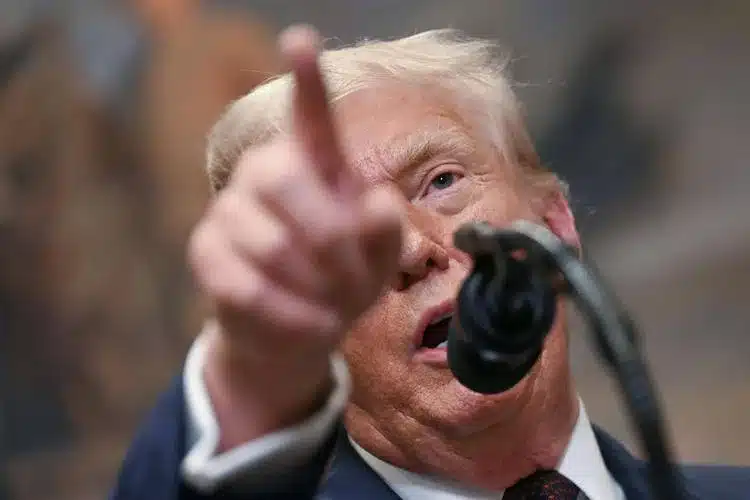
Unveiled as a postwar mechanism for Gaza, President Trump’s proposed Board of Peace has rapidly evolved into a sweeping — and controversial — alternative vision for global diplomacy.
 President Donald Trump’s newly unveiled “Board of Peace” was initially billed as a pragmatic tool to oversee the reconstruction of Gaza after two years of war. Just months later, it has grown into something far larger — and far more divisive — raising eyebrows across Western capitals and prompting pointed questions about the future of the United Nations.
The board, which Trump would chair indefinitely, has struggled to attract traditional U.S. allies but has gained backing from a disparate coalition that includes Middle Eastern monarchies, authoritarian leaders and figures facing international legal scrutiny. Trump has invited roughly 50 countries to join what a draft charter describes as a new “international organization” tasked with promoting peace, stability and governance in conflict-prone regions worldwide.
That charter, obtained by CNN, no longer mentions Gaza at all.
Originally floated last September as part of a second phase of a U.S.-brokered ceasefire plan for Gaza, the Board of Peace gained international legitimacy when the UN Security Council endorsed the broader agreement in November. The board was meant to supervise Gaza’s demilitarization and reconstruction. But Trump’s ambitions soon expanded.
Now, the board’s remit stretches across global conflicts, and Trump has openly suggested it “might” one day replace the United Nations — a comment that has deeply unsettled diplomats and multilateral institutions alike.
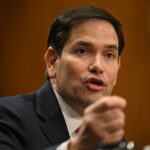
Under the current proposal, Trump would serve as the board’s chairman beyond his presidency. Beneath him would sit a founding executive board including his son-in-law Jared Kushner, Secretary of State Marco Rubio, special envoy Steve Witkoff and former British Prime Minister Tony Blair.
Membership, however, comes at a price. Countries would serve three-year terms, after which a permanent seat would require a $1 billion payment — funds the administration says would be directed toward rebuilding Gaza. Critics warn the structure is ripe for politicization and corruption.
Despite the controversy, a senior administration official says about 35 countries are expected to attend a signing ceremony Thursday on the sidelines of the World Economic Forum in Davos.
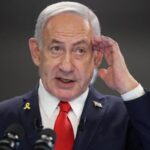
Among those who have agreed to join are Saudi Arabia, the United Arab Emirates, Egypt, Qatar, Turkey, Pakistan, Hungary, Morocco, Israel, Argentina and several Central and Southeast Asian nations. Armenia and Azerbaijan — fresh off a U.S.-brokered peace deal — are also on board.
Belarusian leader Alexander Lukashenko, often labeled Europe’s last dictator, has signed up, and Trump has claimed that Russian President Vladimir Putin has agreed in principle, though Moscow has yet to confirm. Putin’s possible participation has alarmed critics, given Russia’s ongoing war in Ukraine. Trump acknowledged the optics, telling CNN, “I have some controversial people on it.”
Canada plans to participate conditionally, with Prime Minister Mark Carney saying financial and governance details remain unresolved.
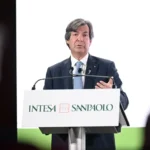
Others have declined outright. France and Norway cited concerns about how the board would coexist with the UN. Ukraine rejected the idea of sitting alongside Russia and its allies, while China confirmed it had been invited but reaffirmed its commitment to “the international system with the UN at its core.” Italy has raised constitutional concerns, and Ireland says it is still reviewing the proposal.
The strongest criticism centers on Trump’s suggestion that the Board of Peace could supplant the UN, an institution founded 80 years ago to safeguard global peace. The board’s charter refers vaguely to “institutions that have too often failed,” language widely interpreted as a swipe at the UN.
UN officials have pushed back forcefully. “The United Nations isn’t going anywhere,” said Tom Fletcher, the UN’s top humanitarian official.
For now, Trump appears undeterred. To supporters, the Board of Peace represents bold thinking and leverage-driven diplomacy. To critics, it is a risky experiment that could undermine decades of multilateral cooperation — replacing consensus with cash, and shared governance with a single, permanent chair.
Whether it becomes a genuine force for peace or a parallel power structure remains an open question — one the world will be watching closely as leaders gather in Davos.
(Associated Medias) – all rights reserved
L’articolo Inside Trump’s ‘Board of Peace’: Ambition, Allies and Alarms proviene da Associated Medias.