by Redazione
What is certain is that this decision was anything but impulsive. It represents the culmination of a long process of careful evaluation and a deep reading of ongoing transformations in global energy markets and the international system.
By Dr. Nidal Shoukeir
Professor of Strategic Communications and Governmental Relations
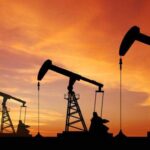
In a moment that was far from ordinary in the history of global energy markets, the United Arab Emirates announced its decision to withdraw from OPEC and OPEC+, in a move whose impact extended well beyond geography. It has reignited a broad international debate on the future of energy and its evolving balance of power. In reality, Abu Dhabi’s bold decision was not merely a technical or economic step; it carries profound strategic implications, reflecting a shift in vision and confirming that the world is entering a new phase where stagnation is no longer an option, and waiting is no longer a viable policy.
A Strategic Reading of Abu Dhabi’s Decision and Its Impact on the Future of Global Energy
While the decision may have appeared sudden to some, it is in fact the result of a long accumulation of diverging perspectives and orientations. The UAE—no longer viewing itself as merely an oil-producing state, but as an active player in shaping the future—found itself at a strategic crossroads: either remain within a traditional framework that no longer accommodates its accelerating ambitions, or break free and move toward broader horizons aligned with its long-term vision.
From the moment the decision was announced, global media outlets and social platforms were flooded with questions and analyses, reflecting the scale of international attention surrounding this unprecedented step.
The most pressing question was clear: why did the UAE leave OPEC?
What is certain is that this decision was anything but impulsive. It represents the culmination of a long process of careful evaluation and a deep reading of ongoing transformations in global energy markets and the international system. It is a sovereign and strategic decision, taken with confidence and awareness, at a moment that reflects a precise understanding of the coming phase. This was echoed in the statements of Suhail Al Mazrouei, UAE Minister of Energy and Infrastructure, who emphasized the necessity of adapting to rapid transformations in energy markets—capturing the very essence of the philosophy behind this decision.
Four Key Drivers Behind the Shift
- Imbalance Between Production Ambitions and Regulatory Constraints
Energy is no longer merely a resource measured by output volumes; it has become part of a broader strategic ecosystem linked to innovation, sustainability, and economic transformation. In this context, clear divergences emerged within OPEC and OPEC+ regarding production quotas, creating a gap between the UAE’s actual capabilities and the imposed regulatory constraints.
As the UAE expanded its investments and enhanced its production efficiency, these constraints evolved from a regulatory framework into a limiting factor, restricting the optimal use of national capacities. Rebalancing production potential with sovereign decision-making thus became a strategic necessity rather than a tactical choice.
- Declining Effectiveness of the System in Stabilizing Markets and Protecting Interests
In recent years, global energy markets have undergone deep transformations that have tested the ability of OPEC and OPEC+ to maintain balance. Despite ongoing coordination mechanisms, sharp price fluctuations, increasing geopolitical pressures, and the accelerated transition toward alternative energy have reduced the system’s ability to ensure long-term stability.
Successive crises—particularly escalations in the Gulf region—have revealed a clear gap between production coordination logic and the need to protect the strategic interests of member states. Notably, the system’s role in securing supply chains, protecting infrastructure, and ensuring continuity of flows has been largely absent in an increasingly complex global environment.
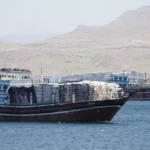
More significantly, threats have not only originated from outside the organization but also from within. Iran, an OPEC member, has emerged as one of the most prominent sources of risk to regional and global energy sectors—whether through targeting oil infrastructure in neighboring Gulf states or threatening to close the Strait of Hormuz—raising fundamental questions about the organization’s capacity to protect its members during crises.
- Energy Sovereignty as an Extension of National Security
This decision goes beyond economics to touch the core of strategic sovereignty. The UAE, as an influential regional and global actor, is moving toward a model based on decision-making independence and rapid responsiveness, free from the complexities imposed by multilateral frameworks.
Rapid regional developments and the threats that have targeted critical infrastructure and energy sectors during periods of tension between Washington and Tehran have added a direct security dimension to the energy equation. Energy security has once again become inseparable from national security.
In this context, possessing a flexible and independent decision-making framework in energy management becomes essential for safeguarding strategic interests—not merely one option among many.
- A Strategic Shift Toward a More Influential Position in the Global Energy System
This move should not be interpreted as a withdrawal from the system, but rather as a repositioning within it. The UAE is gradually transforming from a compliant actor within a traditional framework into a player contributing to the redefinition of global energy rules.
It marks a transition from participating in management to influencing direction, from adapting to markets to shaping their future. These steps reflect a long-term vision of the country’s role in the global economy, where influence is no longer measured solely by production volume, but by the capacity to shape global transformations.
Conclusion
Ultimately, this shift cannot be reduced to a mere regulatory decision within the energy system. It represents a qualitative transformation in the UAE’s position within the international order. Having successfully built an advanced economic model and established itself as a reliable actor in energy markets, the country is now entering a deeper and broader phase: redefining its role from within the system itself, rather than at its margins.
This transformation goes beyond repositioning within energy markets; it reflects a broader evolution in the state’s logic—from managing balances within existing frameworks to actively contributing to reshaping those frameworks. From reacting to the rules of the game to influencing their evolution.
At a time when the global energy system is being reshaped under geopolitical, technological, and environmental pressures, the UAE’s decision becomes part of a broader wave redefining the meaning of power in energy markets. Scale alone is no longer the defining factor; rather, it is the ability to adapt swiftly, create alternatives, and maintain independent decision-making margins.
On the international level, this decision is not seen as an exit from the energy landscape, but as a transformation in the nature of presence within it. The UAE, which has historically contributed to market stability within OPEC and OPEC+, is not abandoning its role but redefining its tools—gaining greater capacity to influence major trends and contribute to shaping more flexible and sustainable global energy balances.
What has occurred is not merely an administrative shift within an old system, but the beginning of a new positioning for a state that no longer seeks simply to be part of the global economic order, but to actively reshape it from within—quietly, yet with increasing effectiveness. “What the UAE has done today is not an exit from OPEC, but a transition from the logic of waiting to the logic of shaping the future.”
(Associated Medias) – Tutti i diritti sono riservati
L’articolo Nidal Shoukeir, “The Uae after Opec: from managing production to shaping influence proviene da Associated Medias.