by Redazione
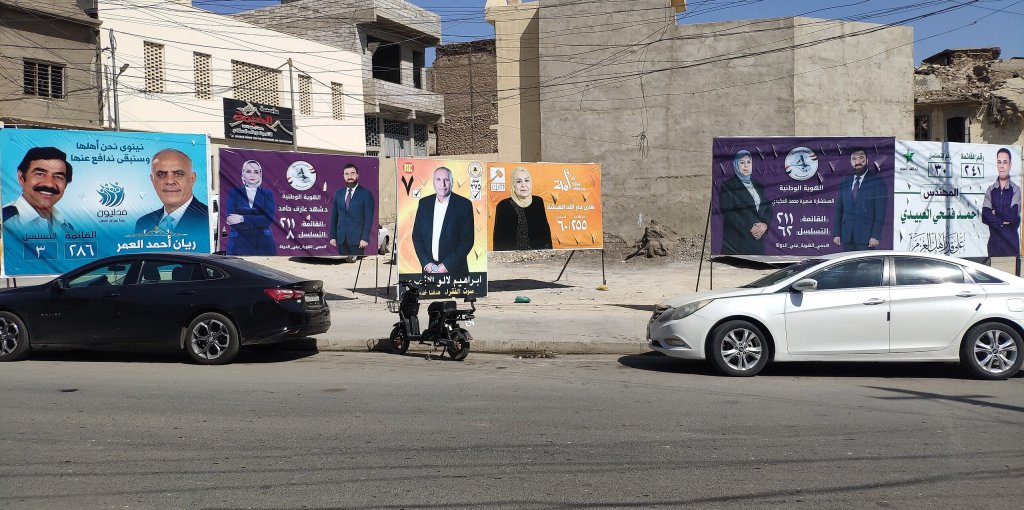
At a crossroads between past and future, Iraq faces a defining moment in its modern history.This election, the sixth since the U.S.-led invasion in 2003 that toppled the Baathist regime under the late President Saddam Hussein, comes at a critical moment, where the challenges of nation-building intersect with regional transformations.
By Dr. Nidal Shoukeir
Professor of Strategic Communications and Governmental Relations
 Iraq is facing a pivotal electoral milestone.as more than twenty million Iraqis head to the polls to elect a new parliamentary council, tasked with leading the country through a highly sensitive period, both domestically and internationally.
This election, the sixth since the U.S.-led invasion in 2003 that toppled the Baathist regime under the late President Saddam Hussein, comes at a critical moment, where the challenges of nation-building intersect with regional transformations. It poses a fundamental question to all Iraqis:
Which Iraq do you want? And what future will you choose for a country exhausted by wars and divisions, yet still possessing the potential for revival if the will and vision are present?
Iraqis go to the polls this time fully aware that this election is no ordinary event, and that its results will be exceptional — not only in the trajectory of state-building, but also in determining Iraq’s position within regional and global equations.
Identity Crisis and the Absence of a Unified State
Domestically, since the fall of the Baathist regime, Iraqis have faced numerous challenges in building a new state capable of fulfilling the aspirations of a united homeland for all its citizens.
The reality has shown that sectarian and ethnic identities have dominated the political landscape over the past two decades, often at the expense of a unifying national identity. This has entrenched a fragile sectarian system that has burdened state institutions and impeded their development and progress toward the future.
Consequently, corruption has spread across various levels, becoming one of the defining features of the new state, eroding public trust and obstructing development and reform initiatives. This situation has also led to widespread voter apathy, with some political forces boycotting the elections, making turnout itself a critical test of the political system’s credibility and its ability to restore Iraqis’ trust.
Amid the entrenched sectarian quota system, the country has drifted away from the principles of modern democratic governance, and maintaining security has become one of the most complex challenges. The proliferation of militias and armed groups has weakened state sovereignty and institutions, raising serious questions about Iraq’s ability to assert control over its entire territory under the current structure.
Iraq Between External Influence and Sovereignty
Externally, the world watches Baghdad closely, anticipating the outcome of this pivotal election and seeking an answer to one fundamental question:
Which Iraq will the people choose? Will it be an Iraq open to the Arab and global environment, striving to restore its historic role as a bridge for communication and stability? Or will it be an Iraq mired in power struggles, pulled in conflicting directions that restrict its national decision-making and hinder its development?
In light of rapid regional changes — from the gradual waning of Iranian influence to the resurgence of regional Arab dynamics, and the reshaping of international power balances following the Gaza war, the collapse of the so-called Resistance Axis, and ongoing developments in Syria — Iraq finds itself at a genuine crossroads: either to choose the path of a united national state or remain an open arena for external entanglements and internal contradictions.
One of the most pressing challenges Iraq has faced in recent years is the issue of external influence and the overlapping interests of regional and international powers within its borders, which has hindered the full restoration of sovereignty and independent decision-making.
Iranian influence, in particular, and the presence of militias and political parties linked ideologically and politically to Tehran, remain major obstacles to building an independent national state. This situation has also raised concerns among many regional and international actors, especially given the overt connections of these groups with Iran and their attempts to draw Iraq into regional conflicts.
It is noteworthy that the performance of Prime Minister Mohammed Shia’ Al Sudani’s government has been notable in recent times, successfully keeping the country from becoming involved in any military support or engagement in favor of Hamas, similar to what occurred in Lebanon and Yemen. Nevertheless, the world’s attention remains on the election results as a measure of Iran’s influence in Iraq and its impact on the country’s regional and Arab position.
The Crucial Choice: A State-Based Iraq or an Iraq of Crises?
Today, despite the enormous challenges and serious concerns facing Iraq and its people, citizens must head to the polls to exercise their national duty responsibly. Participation across all political and social affiliations is a reaffirmation of hope in building a new, unified Iraq for all its people.
Voting in this election is a means of change and an opportunity to assert Iraqis’ will before the world:
They want an Iraq of civilization, openness, and moderation.
They seek a state, not a sectarian fiefdom.
They aspire to a sovereign, fully independent country, free from external subordination.
They demand a state that works for the benefit of Iraqis alone, extending a hand to neighbors and the world to serve as a beacon and a bridge for regional stability and development.
It is time for Iraq to rise from under the rubble of divisions and reclaim its natural position as a vibrant heart of civilization.
Iraqis, this is a pivotal moment in your modern history — a moment of choosing between past and future.
This election is not merely a periodic democratic process; it is a chance to renew the national pact and define Iraq’s identity in the 21st century: a state-based Iraq with strong institutions… or an Iraq defined by crises and divisions.
So, which will you choose?
(Associated Medias) – Tutti i diritti sono riservati
L’articolo Nidal Shoukeir, “Which Iraq will the Iraqis choose?” proviene da Associated Medias.