by Janice McAllister
Faced with backlash from allies and a potential rupture in NATO, President Trump backs down from his demand for U.S. control over Greenland, agreeing instead to a future Arctic security framework.
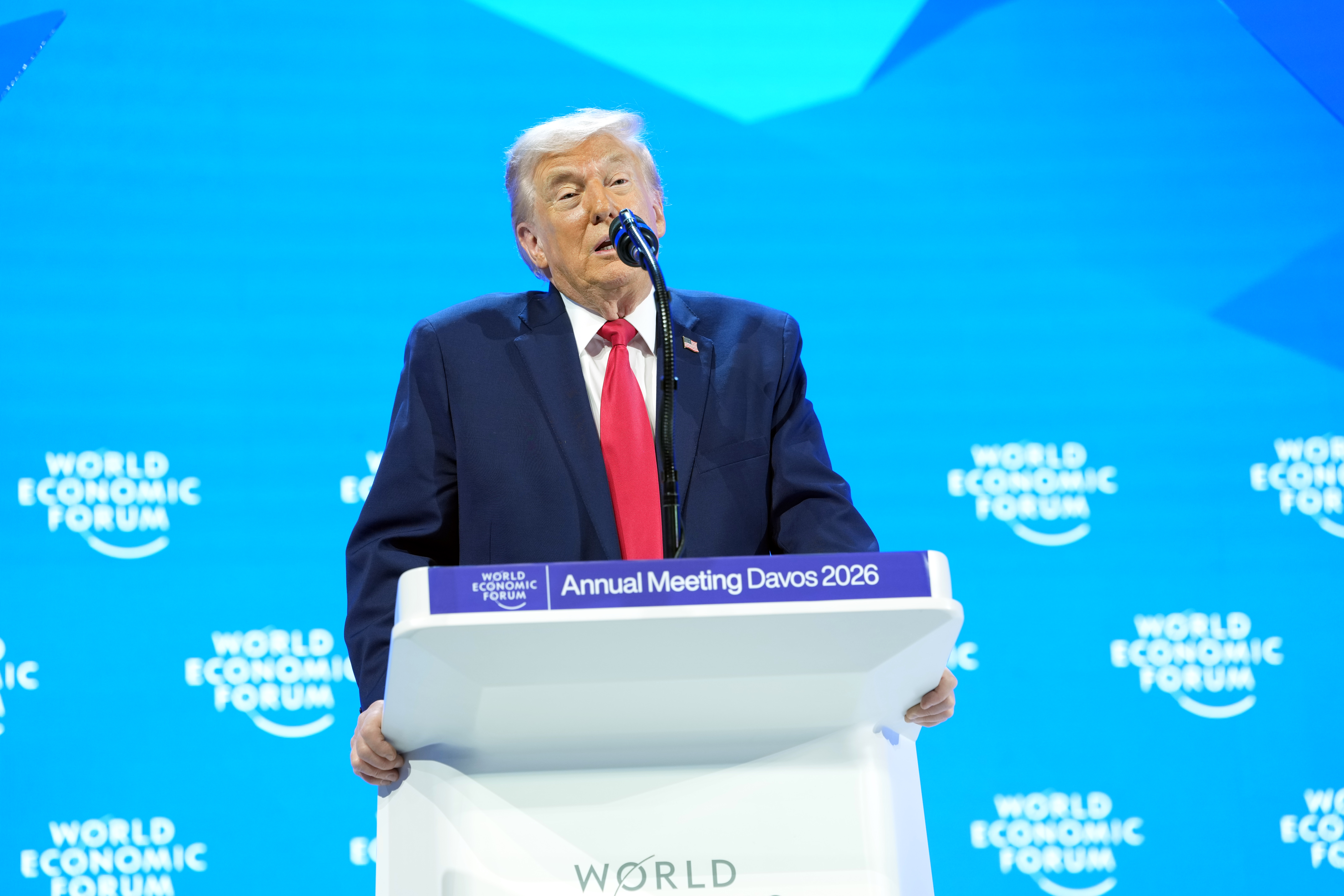
President Donald Trump dramatically reversed course Wednesday, announcing he will cancel planned tariffs on eight European nations after securing a tentative agreement with NATO on future Arctic cooperation. The decision marks a de-escalation of a crisis that had brought transatlantic relations to the brink, following Trump’s high-profile push to acquire Greenland from Denmark.
In a statement posted on his social media platform shortly after his speech at the World Economic Forum, Trump said he had reached an understanding with NATO Secretary General Mark Rutte on a “framework of a future deal” that addresses U.S. security concerns in the Arctic. The specifics remain vague, but discussions reportedly include expanding U.S. military infrastructure in Greenland and linking the plan to the controversial Golden Dome missile defense program — a $175 billion initiative that would, for the first time, deploy U.S. weaponry in space.
Trump’s sudden retreat from the tariff threat came after weeks of fiery rhetoric and escalating pressure on European allies, who had steadfastly rejected the idea of ceding Greenland, a semi-autonomous Danish territory. The tariffs — which were set to begin at 10% in February and increase to 25% by June — had rattled markets and threatened to further destabilize NATO.
In Davos, Trump used his 70-minute address less to discuss inflation and housing costs — the original theme of his appearance — and more to defend his position on Greenland. Calling the icy territory “cold and poorly located,” he insisted that acquiring it was a matter of national security.
“We want a piece of ice for world protection, and they won’t give it,” Trump said, adding, “You can say yes, and we will be very appreciative. Or you can say no, and we will remember.”
Still, he promised not to use force: “We probably won’t get anything unless I decide to use excessive strength and force, where we would be frankly unstoppable. But I won’t do that, OK?”
Trump also repeatedly — and mistakenly — referred to Greenland as Iceland during his speech, calling the island “an enormous unsecured part of North America” that rightfully belongs to the U.S.
Following his remarks, NATO Secretary General Rutte publicly reaffirmed the alliance’s commitment to collective defense, stating, “You can be assured, absolutely,” when asked whether NATO would back the U.S. in case of an attack. Not long after, Trump announced he would drop the tariff threats.
European leaders greeted the move with cautious relief. Danish Foreign Minister Lars Løkke Rasmussen welcomed Trump’s reversal, especially the pledge not to pursue Greenland by force. “Now, let’s sit down and find out how we can address the American security concerns in the Arctic while respecting the red lines of the Kingdom of Denmark,” he said.
Despite the thaw at the diplomatic level, tensions remain. Greenland’s government issued a crisis preparedness guide to its citizens, advising them to stockpile five days’ worth of food, water, fuel, and essential supplies. In Nuuk, residents rushed to grocery stores. “It’s better to be ready than not ready,” said one shopper, Tony Jakobsen.
Others expressed anger and disbelief. “It’s insulting,” said Johnny Hedemann, a Nuuk resident, who purchased a camping stove in response to the perceived threat. “Trump talks about the Greenlandic people and the Greenlandic nation as just an ice cube. Now there’s another threat — and that’s Trump.”
Financial markets, shaken by Trump’s earlier threats, bounced back following news of the NATO framework and the cancellation of tariffs. White House aides, who had feared Trump’s hardline approach could endanger broader foreign policy goals, were also reportedly relieved.
Trump’s speech was supposed to center on lowering U.S. housing prices, but he dismissed proposals aimed at improving affordability, arguing they could deflate property values and make homeowners “feel poorer.” Greenland, once again, took center stage.
And yet, even after backing down, Trump has not entirely let go of the idea. He called for “immediate negotiations” with Denmark and NATO, suggesting the deal may yet take shape — under American terms.
(Associated Medias) – all rights reserved
L’articolo Trump Drops Greenland Tariff Threat After NATO Compromise proviene da Associated Medias.