by News Desk
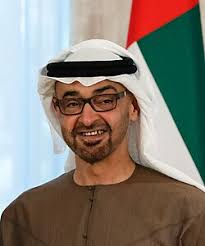
Reports from several Turkish and Middle Eastern media outlets claim that the President of the United Arab Emirates, Mohammed bin Zayed Al Nahyan, has died following a stroke. At present, there has been no official confirmation from authorities in Abu Dhabi. The rumors have already had diplomatic repercussions, including the cancellation of high-level international meetings and speculation regarding succession.
International Desk
In recent hours, regional media sources have circulated reports of the alleged death of Mohammed bin Zayed Al Nahyan, President of the United Arab Emirates and Ruler of Abu Dhabi. According to some Turkish newspapers, the Emirati leader suffered a stroke that led to serious consequences, prompting the cancellation of several major diplomatic engagements.
Among the reportedly canceled commitments was a planned visit by Turkish President Recep Tayyip Erdoğan, further fueling speculation about a sudden deterioration in the health of the Emirati head of state. The rumors suggest that Mohammed bin Zayed fell ill approximately 48 hours after a meeting with Qatar’s Emir, Tamim bin Hamad Al Thani — a summit that had drawn international attention for its geopolitical significance within Gulf relations.
At this time, however, no official confirmation has been issued by the authorities of the United Arab Emirates. Neither the state news agency WAM nor the government of Abu Dhabi has released any formal statement regarding the president’s death. In the absence of an institutional announcement, the reports must be considered unverified.
Mohammed bin Zayed, widely known by the acronym MBZ, is one of the most influential figures in the contemporary Middle East. Formally assuming the presidency of the UAE in 2022 following the death of his brother Khalifa bin Zayed, he had long been the primary architect of the country’s foreign policy and regional strategy. Under his leadership, the UAE strengthened its position as an economic and diplomatic power, consolidating relations with the United States, Europe, and Asia while pursuing an active foreign policy across the Gulf and North Africa.
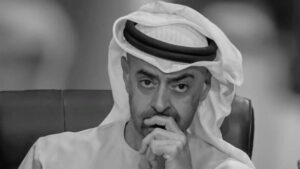 Should his death be confirmed, it would represent a delicate transition for the internal balance of the Emirati federation and for the broader Middle Eastern geopolitical landscape. According to unofficial sources, Khalid bin Mohammed bin Zayed, the current Crown Prince of Abu Dhabi, has allegedly been identified as a possible successor to lead the country. Again, these reports remain unconfirmed.
The news, widely shared on social media, has sparked mixed reactions. In political and religious circles across the Arab world, messages of prayer and commentary regarding the Emirati president’s role have proliferated, while others have pointed to the UAE’s controversial involvement in certain regional crises. Online, some polemical statements have circulated — including claims that if the Muslim world had been as united in prayer for Palestine as it was in response to the alleged downfall of MBZ, Palestine would have been freed decades ago. Such remarks reflect the emotional and divisive climate that often surrounds news concerning high-profile regional leaders.
In recent years, Mohammed bin Zayed has been at the center of significant geopolitical transformations. The UAE has promoted economic modernization and international openness, culminating in the Abraham Accords with Israel in 2020, while also maintaining an assertive foreign policy across several regional theaters. His leadership has been described as pragmatic and stability-oriented, though not without criticism regarding civil and political rights.
If the reports of his death are confirmed, a significant institutional transition would follow. The Emirati system provides for succession mechanisms within the Al Nahyan family, yet the political and symbolic impact of a change at the top would remain substantial for the Gulf region as a whole.
For now, in the absence of official confirmation from Abu Dhabi, the situation remains suspended between rumor and diplomatic caution. In cases such as this, verification and journalistic prudence are essential to avoid the spread of unconfirmed reports that could carry international repercussions.
The coming hours will be decisive in clarifying whether the United Arab Emirates is truly facing a historic turning point or whether the circulating reports are the result of premature speculation.
(Associated Medias) – Tutti i diritti sono riservati
L’articolo United Arab Emirates, Reports on the Death of Mohammed bin Zayed: Awaiting Official Confirmation proviene da Associated Medias.