by Jack Diffley
As EU leaders debate unlocking £78bn in frozen Russian assets for Ukraine, Zelenskyy continues diplomatic efforts with a visit to the Pope and Giorgia Meloni in Rome.
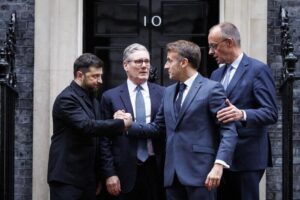
European leaders reaffirmed their unwavering support for Ukraine during high-stakes talks in London on Monday evening, as hopes rose for a breakthrough in efforts to repurpose tens of billions in frozen Russian assets to support Kyiv’s war-torn economy.
British Prime Minister Keir Starmer hosted Ukrainian President Volodymyr Zelenskyy at Downing Street alongside French President Emmanuel Macron and German Chancellor Friedrich Merz. The meeting, also attended via videolink by leaders from seven other European nations, senior Turkish officials, and top representatives from NATO and the EU, came at a moment of renewed urgency for Ukraine as pressure mounts both on the battlefield and diplomatically.
Downing Street said the discussions yielded “positive progress” on turning some of the £180bn in frozen Russian state assets—held in European financial institutions since the 2022 invasion—into a £78bn reparations-based loan for Ukraine. The European Commission’s long-anticipated proposal for this plan is expected to be finalized during the EU summit on 18–19 December.
While the UK has already committed to allocating £8bn of its own frozen Russian funds, it is pushing for a coordinated approach with other European allies. The mechanism under discussion would allow Ukraine to access funding now, with the expectation that Moscow will eventually pay reparations. These reparations would then be used to repay the EU institutions issuing the loan.
However, not all EU countries are on board. Belgium, where £160bn of the immobilized assets are held at the Brussels-based Euroclear, remains a major holdout, worried about potential legal liability and retaliation from Russia. Merz recently traveled to Brussels to try to soften the Belgian position, and Starmer is expected to continue that effort in person later this week with Belgian Prime Minister Bart De Wever.
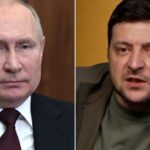
The European show of unity came against the backdrop of mounting pressure from Washington. Donald Trump, currently leading polls ahead of the 2026 US presidential election, has urged Zelenskyy to accept a peace deal involving territorial concessions to Russia. Trump has claimed—without evidence—that both the Ukrainian people and Vladimir Putin support the plan.
Zelenskyy pushed back strongly at a press conference after the talks, saying, “Russia is insisting that we give up territories, but we don’t want to cede anything. There are difficult problems concerning the territories and so far there has been no compromise.” He emphasized that Ukraine has neither the legal nor moral right to surrender land.
Despite sharp US rhetoric, Zelenskyy described the talks in London as productive, stating that Ukraine and Europe are edging “towards peace,” and hinted that a joint proposal could be ready “by tomorrow” to present to Washington. National security advisers from the UK, France, Germany, and Ukraine are continuing technical discussions this week around the US-led framework, which remains controversial for appearing to favor Russian positions.
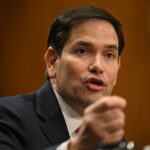
Meanwhile, British Foreign Secretary Yvette Cooper met with US Secretary of State Marco Rubio to discuss alignment on Ukraine policy. Their talks came shortly after the release of the Trump administration’s national security strategy, which calls for de-escalation with Moscow and paints NATO expansion and migration as existential threats to Europe.
On the diplomatic front, President Zelenskyy continues his European tour today with a visit to Rome, where he is scheduled to meet Pope Francis at the Vatican and hold bilateral talks with Italian Prime Minister Giorgia Meloni. The visit is part of a broader push to consolidate European support ahead of next week’s EU summit and to reinforce Ukraine’s message that peace cannot come at the cost of territorial integrity.
(Associated Medias) – all rights reserved
L’articolo Europe Rallies Behind Zelenskyy Amid Peace Push and Asset Talks – Ukrainian President Heads to Italy for Key Meetings proviene da Associated Medias.