by Ennio Bassi
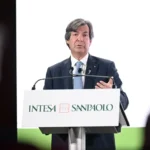
“Any potential mergers among our competitors will not change Intesa Sanpaolo’s leadership. It will take years before a true challenger emerges. This is the moment to accelerate internationally.” Says Carlo Messina, CEO
 With a record €9.3 billion net profit in 2025 and a 2026–2029 industrial plan committing up to €50 billion to shareholders, Intesa Sanpaolo positions itself as one of the most shareholder-friendly and capital-efficient banks in Europe. Under the leadership of CEO Carlo Messina, the group combines high profitability, disciplined risk management, structural cost efficiency and an exceptional capital return policy, standing out in a sector still marked by fragmentation and strategic uncertainty.
An exceptional 2025 sets the tone
Intesa Sanpaolo enters its new industrial cycle from a position of strength that few European banks can credibly claim. In 2025, the group delivered a record net profit of €9.3 billion, up 7.6% year-on-year, exceeding the targets of its previous plan well ahead of schedule. Fourth-quarter earnings alone reached €1.7 billion, confirming the resilience and consistency of the operating model even as interest-rate tailwinds began to normalize.
Operational trends were equally solid. Net operating income increased, driven by a growing contribution from fees, insurance and wealth management, while operating costs declined by 0.6%. Credit quality remained best-in-class: non-performing loans at just 0.8% (EBA definition) and a cost of risk of 41 basis points, falling to 26 basis points excluding extraordinary provisions. Capital strength was reaffirmed with a CET1 ratio of 13.9%, still at 13.2% after dividends and buybacks.
For international investors, these numbers matter because they demonstrate that Intesa’s profitability is not cyclical or accidental. It is structural.
A €50 billion commitment to shareholders
 The defining feature of Intesa Sanpaolo’s 2026–2029 plan is its capital return strategy. Between 2025 and 2029, the bank expects to distribute approximately €50 billion to shareholders. From 2026 to 2029, the payout ratio will be set at 95% each year, split between 75% cash dividends and 20% share buybacks. Additional distributions may be considered from 2027 onward, provided the CET1 ratio remains above 12.5%.
In the European banking landscape, this is an extraordinary commitment. It reflects a business model with low capital absorption, predictable earnings and limited balance-sheet volatility. Few peers can match this level of visibility and confidence.
As Carlo Messina emphasized when presenting the plan, competitive consolidation elsewhere will not undermine Intesa’s position. On the contrary, the group believes it has years of strategic advantage ahead, particularly in wealth management and advisory, where scale, trust and distribution are decisive.
The path to 2029: growth with discipline
By 2029, Intesa Sanpaolo targets net income above €11.5 billion, with a ROE of 22% and a ROTE of 27%. Net operating income is expected to rise to €30.7 billion, from €27.3 billion in 2025, growing broadly in line with nominal GDP but with a progressively higher share of fees and insurance, which will account for 44% of total revenues.
Wealth management remains central to the equity story. Client financial assets are projected to reach approximately €1.7 trillion, with assets under management rising to €663 billion. Net fee income is expected to grow at nearly 4% per year, while insurance results should approach €2 billion by the end of the plan.
This expansion is supported by commercial investments rather than acquisitions. The bank plans to add 2.5 million clients, expand lending selectively, and strengthen its advisory network with 3,700 additional professionals, bringing the total to over 22,000.
Technology, efficiency and risk control

Cost discipline remains a hallmark of the Messina era. Despite continued investment, operating costs are expected to decline to €11.3 billion by 2029, improving the cost/income ratio to 36.8%, one of the best among large European banks.
A key enabler is technology. Intesa will invest €5.1 billion, mostly in digital infrastructure and growth initiatives. Its proprietary isytech platform will become fully cloud-based by 2029, generating an estimated €380 million in structural savings.
Risk assumptions remain conservative. The cost of credit is projected at 25–30 basis points, NPLs below 1%, and capital ratios stable, with CET1 around 13.2%. Liquidity metrics remain comfortably above regulatory requirements.
A European champion with global appeal
Underlying the numbers is a clear strategic message for international investors. Intesa Sanpaolo is not betting on macroeconomic acceleration or aggressive M&A. It is betting on execution, diversification of revenues, capital discipline and scale in advisory-led banking.
As Messina stated, this is “the moment to accelerate internationally,” not through costly acquisitions in the eurozone, but by leveraging existing platforms and expertise. The result is a bank that looks increasingly like a European outlier: high-return, low-risk, and relentlessly focused on shareholder value.
For US and UK investors searching for exposure to European banking without the usual trade-offs, Intesa Sanpaolo’s 2026–2029 plan offers something rare: visibility, generosity, and credibility — all at once.
(Associated Medias) – all rights reserved
L’articolo Intesa Sanpaolo: a european banking outlier built for clients and shareholders proviene da Associated Medias.