by Ali Hassan
Tehran accuses President Donald Trump of spreading “disinformation” ahead of crucial nuclear negotiations in Geneva, while Washington reinforces its military presence in the Middle East, raising fears of further escalation
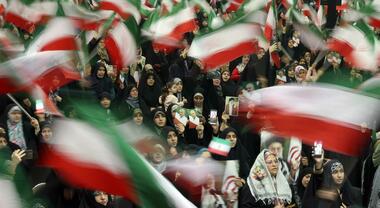 Iran has sharply criticized U.S. President Donald Trump ahead of a new round of nuclear negotiations in Geneva, accusing him of spreading “big lies” as Washington carries out one of its largest military deployments in the Middle East in decades.
The exchange comes on the eve of a third round of talks between Iranian and American officials, mediated by Oman, aimed at curbing Tehran’s nuclear program. Iranian Foreign Minister Abbas Araghchi traveled to Geneva on Wednesday for discussions with a U.S. delegation led by special envoy Steve Witkoff.
In his State of the Union address, Trump warned that Iran was rebuilding its missile capabilities and pursuing nuclear ambitions. “I will never allow the world’s number one sponsor of terror to have a nuclear weapon,” he declared, adding that Tehran was developing missiles capable of reaching Europe and potentially the United States.
Iranian officials rejected those claims. Foreign Ministry spokesman Esmail Baghaei accused the Trump administration of orchestrating a “disinformation and misinformation campaign,” comparing its rhetoric to propaganda tactics of the past. He dismissed allegations about Iran’s nuclear activities and casualty figures from recent unrest as “the repetition of big lies.”
Parliament Speaker Mohammad Bagher Qalibaf struck a dual tone, signaling openness to dialogue while warning of consequences if the U.S. opts for force. “If you choose diplomacy that respects the dignity of the Iranian nation, we will be at that table,” he said. “But if you launch an attack during negotiations, you will taste the firm blow of the Iranian nation.”
Tensions have been amplified by a visible U.S. military buildup. Satellite imagery analyzed by independent observers shows American naval assets repositioned across the region, including the aircraft carrier USS Gerald R. Ford docked in Crete. U.S. officials have declined detailed comment, but the deployments follow repeated warnings from Trump that military action remains an option if diplomacy fails.
The stakes are high. Iran has indicated that U.S. bases in the region could become targets in the event of conflict, putting tens of thousands of American personnel at potential risk. Regional governments fear that any strike could ignite a broader war, particularly as instability linked to the Israel-Hamas conflict continues to reverberate.
Disputed intelligence and conflicting casualty figures further complicate the diplomatic landscape. Trump claimed in his address that at least 32,000 people were killed during protests in Iran last month — a number significantly higher than independent estimates. Human rights groups have reported thousands of deaths, though figures vary widely, and Iranian authorities have provided lower official counts.
Meanwhile, questions remain about the current state of Iran’s nuclear program. Tehran maintains that its activities are peaceful. Western governments and the International Atomic Energy Agency have long expressed concern, particularly after uranium enrichment levels reached 60% purity — a short technical step from weapons-grade material — before reported U.S. strikes in June. Inspectors have yet to fully assess the aftermath of those attacks.
As negotiators prepare to meet in Geneva, uncertainty looms over what failure might entail. Washington has not clarified whether potential military action would aim to pressure Iran into concessions or pursue broader objectives. Analysts warn that limited strikes could escalate unpredictably, with consequences for global energy markets and regional stability already reflected in rising oil prices.
For now, both sides publicly leave the door open to diplomacy — even as their rhetoric and military posturing suggest that the path to agreement remains fraught.
(Associated Medias) – all rights reserved
L’articolo Iran Denounces Trump’s “Big Lies” as Geneva Nuclear Talks Approach Amid Major U.S. Military Buildup proviene da Associated Medias.