by Ennio Bassi
In an exclusive interview with local media, the Eritrean President addresses major geopolitical issues—from the decline of U.S. dominance to Africa’s strategic role—while also outlining national development priorities and regional concerns.
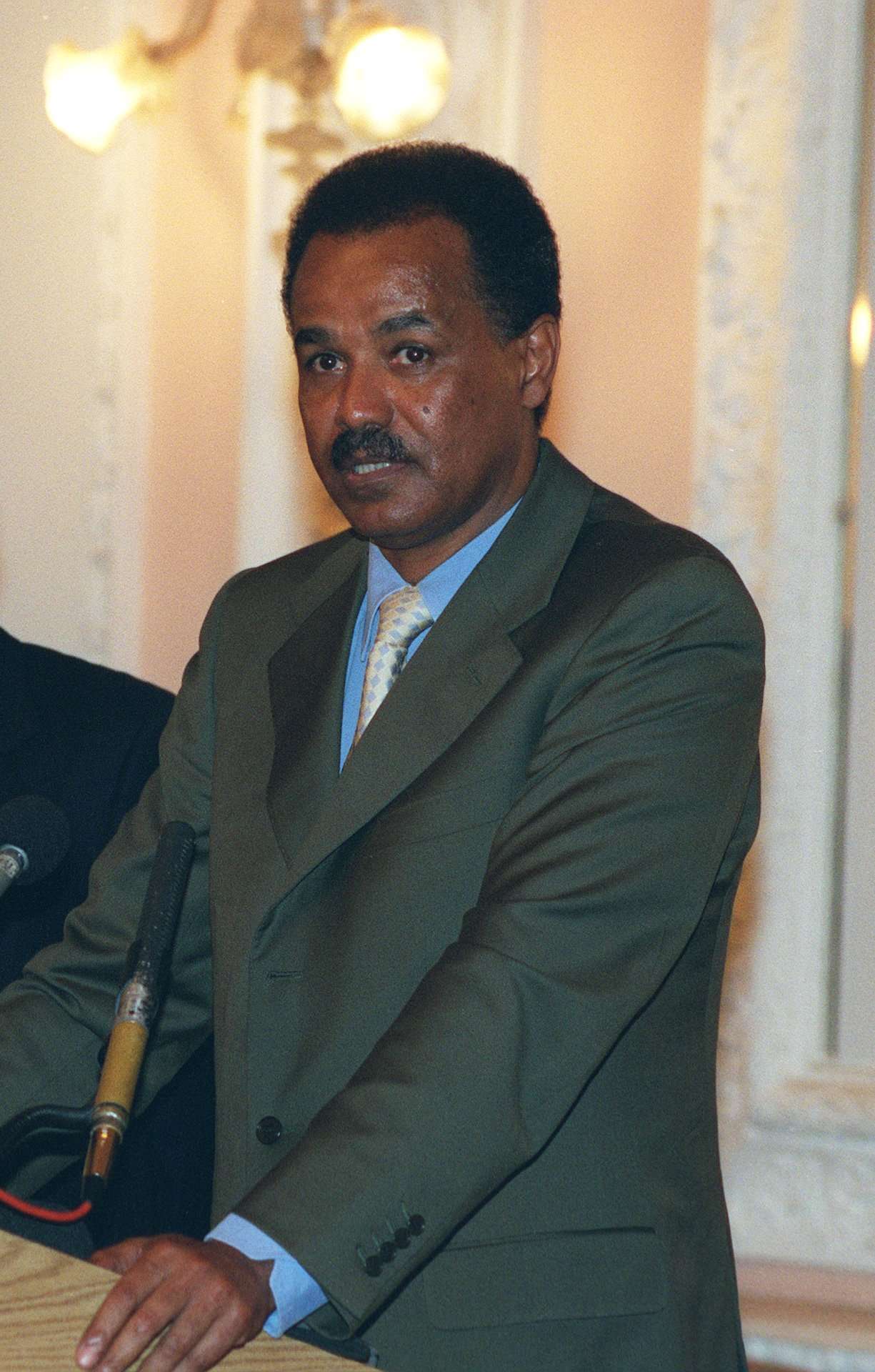 In a lengthy and detailed interview with local media, Eritrean President Isaias Afwerki offered a critical reading of today’s global geopolitical landscape, underlining the need for a new multipolar world order. The conversation touched on global shifts, regional dynamics, and domestic policies, presenting a strategic vision that places Africa—particularly the Red Sea and Horn of Africa region—at the center of ongoing transformations.
End of an Era: From Cold War to the Crisis of Unipolarity
According to Afwerki, the U.S.-led global dominance that followed the Cold War is now in clear decline. “America’s ambitions of total supremacy—economic, technological, and military—have not materialized,” he said, pointing to the U.S. public debt, which has now reached $36 trillion, as a symptom of this decline.
The Eritrean President also analyzed Donald Trump’s “MAGA” doctrine, describing it as an attempt to restore U.S. influence through trade wars, targeted sanctions, and geopolitical maneuvers in strategic regions. He highlighted U.S. actions against Venezuela, Cuba, Iran, and even the EU and Africa, as part of this broader agenda.
Africa on the Sidelines, Despite Strategic Potential
“Despite holding 60% of the world’s natural resources, Africa remains marginalized on the global stage,” Afwerki noted. He called for a strategic rethink of the continent’s role in the coming years, emphasizing the importance of leveraging the geopolitical relevance of the Red Sea, the Horn of Africa, and the Gulf. These areas, he stressed, must be protected and strengthened through a proactive and autonomous foreign policy.
Relations with Washington: A Story of Missed Opportunities
Reviewing ties with the United States, Afwerki recalled Eritrea’s efforts to initiate constructive dialogue during Trump’s first term, which were ultimately derailed by internal pressure within the U.S. administration. “We showed good faith again later, but unfounded reports and sanctions continue to block progress,” he said, referring in particular to a recent State Department report branding Eritrea as an unfavorable environment for investment.
Sudan and Regional Destabilization
Afwerki devoted a significant portion of the interview to Sudan’s crisis, condemning external interference—especially from the United Arab Emirates—as a driving force behind regional instability. “This is not a power struggle between generals,” he said. “It’s the sabotage of a transition process toward civilian rule.” Eritrea continues to support the Transitional Sovereign Council as the only credible path toward lasting peace.
Ethiopian Conflict and Eritrean Position
On Ethiopia’s internal conflict and the posture of the ruling Prosperity Party (PP), Afwerki was blunt: “It is a party at war with its own people. We are not seeking conflict, but we will defend our nation.” He dismissed claims of Eritrean provocation and accused the PP of being manipulated by foreign powers attempting to destabilize the region, just as in Sudan.
Engagements with Saudi Arabia and Egypt
The President reaffirmed Eritrea’s long-standing policy of promoting regional stability through cooperation. “We don’t live in isolation; regional peace is a necessity,” he stated. Engagements with Saudi Arabia and Egypt are part of this broader strategy and have focused on maritime security, development, and regional coordination.
Afwerki mentioned Eritrea’s 12-point proposal for Red Sea cooperation, calling for littoral states to manage their own maritime zones and collectively counter threats such as piracy, drug trafficking, and foreign military interference.
Domestic Development: Energy, Infrastructure, and Education
Despite regional instability, Eritrea remains committed to its domestic development goals. Afwerki outlined a roadmap for 2026–2030, including major investments in infrastructure, water systems (including dam projects and desalination), and decentralized, hybrid energy generation (solar, wind, geothermal, and eventually nuclear).
Education remains the top priority. “We will reform the education system from kindergarten to university,” he announced, tying human capital development to the broader national transformation agenda.
The Role of the Diaspora
Afwerki praised the Eritrean diaspora for its historic role and announced renewed plans to enhance its involvement in national development. Members of the diaspora will be encouraged to invest in sectors like mining, agriculture, and fisheries, as well as contribute expertise in technology, research, and education.
A centralized database to map diaspora skills is in development, though cybersecurity considerations have delayed its rollout. “The goal,” Afwerki concluded, “is to ensure broader and more meaningful diaspora participation in nation-building. The institutional framework is being prepared to make that happen.”
(Associated Medias) – all rights reserved
L’articolo Isaias Afwerki: “A New Global Order is Needed. Africa Must Make Its Voice Heard” proviene da Associated Medias.