
by Redazione
Gaza’s tragedy and the struggle to keep Palestine alive amid devastation and division.The unified Arab stance rejecting Palestinian displacement, and resisting both Israeli and international pressure, represents a decisive turning point in keeping the cause alive. In this context, the intensive mediation efforts led by Egypt and Qatar to reach a ceasefire in Gaza play a central role.
By Dr. Nidal Shoukeir
Professor of Strategic Communications and Governmental Relations
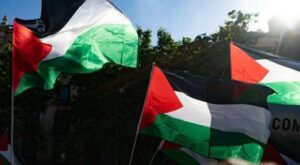 The Gaza Strip is today witnessing one of the most tragic stages in its modern history—arguably the worst of all. The killings resulting from the ongoing Israeli offensive since October 7, 2022, continue to rise without pause. As for the destruction, it needs no elaboration: Gaza has almost entirely turned into a devastated, desolate disaster zone, stripped of the most basic requirements of life. To make matters worse, famine, driven by Israel’s relentless blockade, besieges the people of Gaza, claiming the lives of men and women, the elderly and children alike.
Gaza Under Fire: An Endless Human Tragedy
On top of all these tragedies came the orders issued by the Israeli army, demanding that all residents of Gaza evacuate immediately toward the designated “humanitarian zone” in Al-Mawasi. This decision shocked the conscience of those who remain in the city—and indeed of the entire world. International concern continues to mount amid fears of an impending Israeli military takeover of the besieged enclave and its devastating humanitarian consequences for its defenseless population. Even UNICEF bluntly declared: “The unimaginable is happening in Gaza.”
In reality, this calamity in Gaza is but a fragment of a much larger tragedy: the fate of the “Palestinian cause” after nearly eight decades of the Israeli–Palestinian conflict. It may thus be timely—and necessary—to summon courage and objectivity, moving beyond political chauvinism and populist slogans, to ask the difficult question: What remains of the “Palestinian cause”?
Palestinian Division: Failed Leadership and the Loss of Land
At its core, and far from political bickering and hollow rhetoric, the “Palestinian cause” has always been a matter of land and people. Yet today, viewed objectively, what remains of the land is very little—and what remains of the people is even less. The primary reason lies in the repeated failures of successive Palestinian leaderships, militarily and politically, who neither managed to preserve most of the Palestinian land nor to safeguard the unity of the Palestinian people.
Since 1948, the territory of Palestine has been steadily and dramatically shrinking, due to the obstinacy of Palestinian leaders and their reliance on populist, unrealistic policies. By the dawn of the new millennium, the land of “Palestine” had shrunk into two small, geographically disconnected areas: one in Gaza and another in the West Bank.
With the rise of Hamas and its takeover of Gaza in 2007, followed by a sharp Palestinian schism, Palestinians entrenched not only geographic division but also a deeper political rupture—tearing apart what was left of their cause. The already diminished land was split into two fragile, disconnected entities: one in Gaza under Hamas’s Islamist rule, and the other in the West Bank under Fatah’s authority, led by Mahmoud Abbas “Abu Mazen,” who has remained president since January 15, 2005.
Then came the events of October 7, 2022, followed by a devastating military campaign, ushering in an even harsher chapter in the tragedy of the Palestinian people and their cause. In light of Gaza’s grim reality—destruction, killing, starvation, looming displacement, and reoccupation—many fear the enclave could vanish from the Palestinian map altogether. This would leave only a shrinking West Bank, itself subject to constant attacks and looming annexation, paving the way for the complete disappearance of the “Palestinian cause.”
Prince Bandar bin Sultan Al Saud, former head of Saudi intelligence, once remarked: “The Palestinian cause is a just cause, but its advocates are failures. The Israeli cause is unjust, but its advocates have proven successful.” The truth on the ground may be even harsher: the greatest enemy of the Palestinian cause has not been Israel alone, but also the Palestinian leaders themselves, who have never risen to the level of responsibility or sacrifice demanded of them.
The chronic flaws of Palestinian leadership—compounded by reckless, populist, and strategically blind decision-making—can be summarized in two core problems:
– Reducing the “Palestinian cause” to a bargaining chip in political and religious marketplaces, stripping it of its Arab dimension and turning it into a source of “political money” used to fund regional projects unrelated to Palestine.
– Denying continuous failure and shifting the blame onto the Arabs, sometimes even accusing them of betrayal—despite the immense sacrifices the Arab world has made for Palestine.
The Arabs: A Bet on the Cause’s Survival
The purpose here is not to compile a detailed record of Arab contributions to the Palestinian cause, but ignoring fundamental historical truths would be unjust.
Who sheltered displaced Palestinians fleeing Israel’s killing machine?
Who defended the Palestinian cause in international forums since 1948?
Who provided the Palestinians with everything they demanded, whether in times of war or in attempts at peace?
Who refrained from exploiting the cause, and even went to war against Israel in defense of Palestinian land and people?
Was it not the Arabs? Yes, indeed—it was the Arabs.
Today, once again, Arab states stand firmly beside the “Palestinian cause,” even as it stumbles at a critical crossroads, shattered and fragmented. These states are working in full mobilization to revive the cause and preserve its essence, ensuring it does not fade into the pages of history.
The unified Arab stance rejecting Palestinian displacement, and resisting both Israeli and international pressure, represents a decisive turning point in keeping the cause alive. In this context, the intensive mediation efforts led by Egypt and Qatar to reach a ceasefire in Gaza play a central role.
Equally, Saudi Arabia has exerted enormous diplomatic pressure to secure broad international support for the recognition of the State of Palestine at the United Nations on the 22nd of this month. Meanwhile, the United Arab Emirates has played a central—albeit less publicized—role in placing red lines before the Israeli government and salvaging what can still be salvaged of the Palestinian cause.
So, what remains of the Palestinian cause? Its essence remains: a people still resisting to survive on their land, and an Arab leadership determined to keep Palestine at the heart of their political and human conscience. True, the current reality carries unprecedented challenges, but renewed Arab support—political, diplomatic, and even operational—remains the strongest guarantee against the cause’s extinction. Thus, despite all the wounds, Palestine endures—not as a historical memory, but as a living cause rooted in justice, sustained by the resilience of its people and the Arabs’ insistence on the Palestinian right to statehood, life, and peace.
(Associated Medias) – Tutti i diritti sono riservati
L’articolo Nidal Shoukeir, What Remains of the “Palestinian Cause”? proviene da Associated Medias.