by Jack Diffley
European diplomats and security insiders worry that deepening tensions between Washington and its allies could give Vladimir Putin an opening to intensify pressure on Europe, whether through hybrid attacks or a broader geopolitical provocation
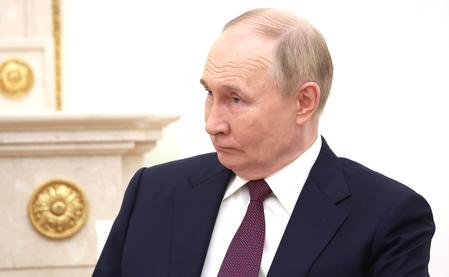 Senior European security officials fear Vladimir Putin could seek to exploit growing fractures within the transatlantic alliance after Donald Trump again threatened to pull the United States out of Nato, raising fresh concern about Europe’s vulnerability at a moment of acute instability.
According to diplomats from European Nato member states, the Kremlin may view the current discord between Washington and its allies as an opportunity to increase pressure on Europe and strengthen Russia’s hand in any eventual settlement over Ukraine. Their concern is not necessarily that Moscow is preparing an immediate conventional assault on a Nato country, but that it could trigger a new crisis through escalation, destabilisation or hybrid warfare tactics designed to expose divisions inside the alliance.
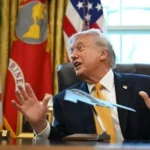
Those fears have been sharpened by Trump’s latest remarks, in which he said he was considering withdrawing from Nato and dismissed the alliance as a “paper tiger”. His frustration appears tied in part to what he sees as insufficient support from allies in the context of the US confrontation with Iran, a conflict that has already sent shockwaves through global markets and diplomacy.
For many European officials, such rhetoric risks handing Putin a strategic advantage. One senior diplomat argued that visible divisions between the United States and Europe only strengthen the Kremlin’s position, especially as Washington grapples with the political and economic fallout of its foreign policy choices. In that reading, Russia may conclude that the West is distracted, internally divided and potentially entering a narrow political window in which American leadership becomes less predictable.
Some diplomats believe Putin could try to manufacture leverage by provoking a crisis elsewhere in Europe, thereby complicating Western unity and shaping the terms of any future peace arrangement in Ukraine. Others caution that Russia may lack the manpower for a direct attack on Nato territory while so many of its forces remain tied down in Ukraine. Even so, they warn there is ample space for escalation below the threshold of open war.
That includes cyber-attacks, disinformation campaigns and other forms of hybrid pressure, which several European governments already regard as a constant reality rather than a distant threat. From that perspective, the concern is less about a dramatic invasion than about a steady intensification of hostile actions aimed at undermining public confidence, political cohesion and the sense of security across the continent.
At the same time, some officials note that Trump’s words do not always translate into immediate action. One diplomat pointed to a longstanding gap between his public hostility towards Nato and the practical military posture of the United States, suggesting that deployments, capabilities and force structure matter more than inflammatory remarks alone. Even so, they acknowledged that repeated threats against the alliance carry their own damage by creating doubt about American reliability.
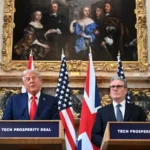
In London, Prime Minister Keir Starmer publicly reaffirmed Britain’s commitment to Nato, calling it the most effective military alliance in history. Yet he also signalled a broader strategic adjustment, arguing that the UK’s long-term interests increasingly require deeper cooperation with European allies and the European Union. That shift reflects a wider recognition across Europe that the continent may need to assume greater responsibility for its own defence, regardless of whether Trump ultimately acts on his threats.
British officials reportedly believe the most effective way to handle Trump is not to react dramatically to every outburst, but instead to respond to the substance of his complaints by increasing European defence contributions and reinforcing strategically sensitive areas such as the High North. There is also hope in some quarters that stronger allied efforts to address the crisis in the Strait of Hormuz may ease tensions with Washington.
Still, concern remains high. Even if US law limits a president’s ability to withdraw unilaterally from Nato, former senior British officials have warned that merely announcing such an intention could trigger serious political and legal turmoil, weakening the alliance in the process. For many in Europe, the episode is another reminder that the greatest risk may not lie only in Russia’s next move, but in whether the West can remain united enough to deter it.
(Associated Medias) – all rights reserved
L’articolo Security Officials Fear Putin Could Test Europe as Trump Renews Threat to Leave Nato proviene da Associated Medias.