by Ali Hassan
Iran’s supreme leader, the central powerbroker of the Islamic Republic for more than three decades, has been reported killed as war breaks open—leaving a vacuum at the top of a system built around his authority
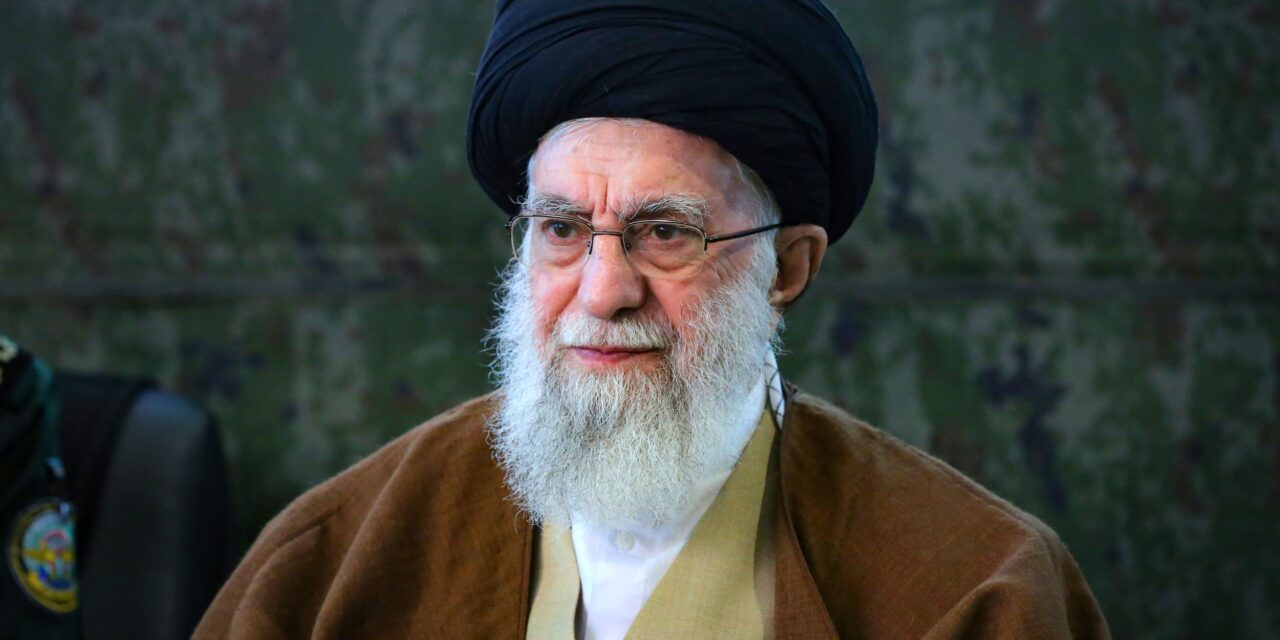
 Ayatollah Ali Khamenei, Iran’s supreme leader for more than 30 years and the most powerful figure in the Islamic Republic, has been reported killed on the first day of large-scale US and Israeli air strikes on Iran. US President Donald Trump announced the death, and Iranian state television later confirmed it, according to the account.
Khamenei’s death, at 86, closes a chapter that defined modern Iran. Since the 1979 Islamic Revolution, the country has had only two supreme leaders. Under Khamenei, the position evolved into an office that sat above the day-to-day turbulence of elected politics and, in practice, controlled the state’s key levers: the armed forces, the elite Revolutionary Guards, the security apparatus, the judiciary, and the gatekeeping institutions that shape who can run for office.
For many Iranians—especially the young—Khamenei was not merely a political figure but a permanent fixture of public life. State media tracked his speeches and appearances, and his portrait became a constant presence in streets, shops, and official buildings. Presidents came and went, often drawing international attention, but at home it was widely understood that strategic decisions ultimately ran through him.
Born in Mashhad in 1939, Khamenei rose through a clerical education steeped in religious study and early political activism. He joined opposition to the Shah and spent years in a cycle of underground organizing, arrest, imprisonment, and exile. After the revolution, Ayatollah Ruhollah Khomeini elevated him into national prominence—most notably as Tehran’s Friday prayer leader, a pulpit that doubled as a powerful political platform broadcast across the country.
Khamenei was part of the revolutionary leadership during the 1979 US embassy hostage crisis, an episode that hardened Iran’s break with Washington and helped lock the new state into decades of isolation. In 1981, he survived an assassination attempt that left him badly injured and permanently impaired in his right arm. Later that year, he became president—a role described as largely ceremonial in a system where ultimate authority lay with Khomeini.
His presidency unfolded during the Iran–Iraq War, a conflict that devastated both nations and deepened his hostility toward the United States and Western powers that Iran’s leaders believed had supported Saddam Hussein. When Khomeini died in 1989, the Assembly of Experts selected Khamenei as successor, despite reservations at the time about his standing as a religious scholar. In his first address, he spoke of his own shortcomings; in the decades that followed, he built a durable political machine.
Over time, Khamenei placed loyalists throughout the state and cultivated a governing coalition anchored in hardline clerics and the Revolutionary Guards. His rule was marked by a blend of ideological messaging, a carefully maintained public persona, and a readiness to use force against dissent. Student protests in 1999 were crushed; the 2009 unrest over a disputed election met mass arrests and violence; and in 2019, as demonstrations flared over fuel prices, authorities shut down the internet and security forces killed protesters, according to rights groups. Women’s rights campaigns—particularly around compulsory hijab rules—were met with arrests and harsh sentences, the account says, and the 2022 protests following Mahsa Amini’s death in custody became one of the most serious challenges to the state in years.
Abroad, Khamenei presided over a foreign policy that mixed confrontation in rhetoric with calibrated risk in practice. Iran’s ties to Hezbollah and its broader network of regional allies made it a constant player in conflicts involving Israel and Arab states, while its nuclear program remained the central point of friction with the West. Khamenei publicly cast nuclear weapons as forbidden under Islam, yet Israel and Western governments accused Iran of pursuing the capability in secret, a dispute that drove punishing sanctions and deepened Iran’s economic crisis.
He allowed the 2015 nuclear agreement to proceed while warning that the United States might not keep its commitments—concerns sharpened when Trump withdrew from the deal in 2018 and restored sanctions. The 2020 killing of Qasem Soleimani, a top Revolutionary Guards commander close to Khamenei, intensified Iran’s hostility and pushed it closer to Russia and China, according to the narrative.
In this account, open war accelerated in mid-2025 with Israeli strikes targeting Iran’s nuclear infrastructure, missile program, and senior commanders—followed by Iranian missile barrages toward Israeli cities. When the United States entered the conflict and struck key nuclear facilities, Khamenei vowed Iran would not surrender, even as observers suggested the regime appeared strained.
By early 2026, the story describes renewed unrest inside Iran driven by economic collapse and met with a severe crackdown, alongside US military deployments and ultimatums over uranium enrichment. Khamenei, the account says, warned that any American attack would ignite a regional war.
Now, with his reported death confirmed by state media, Iran faces its most unpredictable succession crisis in decades—at the worst possible moment, amid escalating military strikes and profound internal pressure. The system Khamenei shaped was designed to revolve around a single authority. What replaces that center—whether an orderly transition or a destabilizing power struggle—will likely determine not only Iran’s direction, but the region’s trajectory in the days ahead.
(Associated Medias) – all rights reserved
L’articolo Khamenei Dead After First Day of US–Israeli Strikes, Ending Iran’s Longest Era of Rule proviene da Associated Medias.