by Jack Diffley
Brent crude briefly jumped above $82 a barrel after vessels were hit near the Strait of Hormuz and Iran warned ships to stay away—raising fears that a prolonged crisis could send prices past $100 and reignite inflation.
Global oil prices climbed sharply on Monday after attacks near the Strait of Hormuz rattled energy markets and shipping traffic slowed to a crawl at one of the world’s most important maritime chokepoints.
Brent crude, the main international benchmark, jumped about 10% to above $82 a barrel in early trading before easing back, as reports emerged that at least three ships had been attacked close to the strait over the weekend. By later on Monday, Brent had slipped to around $79, while US-traded crude was still up roughly 7.6% at about $72.20.
The surge reflects growing concern that fighting between Iran, the United States and Israel could spill more directly into energy logistics. The Strait of Hormuz, a narrow passage at the mouth of the Gulf, is critical: around 20% of the world’s oil and gas shipments pass through it. Iran has warned vessels not to transit the waterway, and the result has been an abrupt slowdown in maritime traffic.
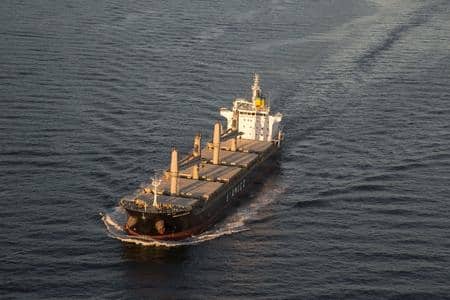
The UK Maritime Trade Operations Centre (UKMTO) said two vessels had been struck and a third experienced an “unknown projectile” exploding in very close proximity. It also reported a separate fourth incident that involved evacuating a crew, though the cause was unclear. Private maritime security firm Vanguard Tech said the incidents appeared to involve ships flagged to Gibraltar, Palau, the Marshall Islands and Liberia—details consistent with the UKMTO’s descriptions.
Despite the headlines, analysts said markets were not yet in full panic mode. Saul Kavonic, head of energy research at MST Marquee, said traders were drawing some reassurance from the fact that—so far—oil transport and production infrastructure did not appear to be the primary target. Still, he said, the key question now is whether traffic through Hormuz resumes. If it does, prices could cool; if not, the upward pressure could intensify quickly.
Others warned the risk is asymmetric: even a temporary closure can produce outsized market moves. Some analysts said crude could climb above $100 a barrel if the conflict drags on and shipping remains constrained—an outcome that would feed into inflation and complicate central bank plans to cut interest rates.
Robin Mills, chief executive of Dubai-based consultancy Qamar Energy and a former Shell executive, said the impact would be felt quickly because traders move in near real-time with developments on the ground. He added that prices are still below levels seen two years ago, meaning the world is not yet in a full-blown oil crisis—but the direction of travel is clear if disruption persists.
Opec+, the coalition of major oil producers, agreed on Sunday to raise output by 206,000 barrels a day in a bid to cushion any price spike. Yet some experts questioned how much that would help if the main problem becomes physical disruption—tankers unable or unwilling to pass through Hormuz—rather than a shortage of supply in the ground.
Signs of disruption are already visible. According to ship-tracking data cited by Kpler, roughly 150 tankers have dropped anchor in open Gulf waters beyond the strait, opting to wait rather than risk transiting. A small number of Iranian and Chinese vessels reportedly passed through on Monday, but overall movement has slowed dramatically. “Because of Iran’s threats, the strait is effectively closed,” said Homayoun Falakshahi of Kpler, pointing to surging insurance costs and the heightened risk calculus facing shipping companies.
The economic ripple effects could be swift. Edmund King, president of the AA, warned that petrol prices could rise worldwide if distribution is disrupted. Subitha Subramaniam, chief economist and head of investment strategy at Sarasin & Partners, cautioned that sustained high oil prices can cascade into food, agriculture and industrial commodities—pushing inflation higher just as it has been easing in countries such as the UK. She suggested that, under such conditions, the Bank of England might choose to hold rates at 3.75% despite earlier signals that further cuts could be possible.
For now, the market is caught between two realities: prices can calm if shipping lanes reopen and military escalation stops short of a wider blockade—but the Strait of Hormuz remains a single point of failure for the global energy system, and the weekend’s incidents have reminded traders how quickly that vulnerability can translate into higher costs at the pump and renewed pressure across the world economy.
(Associated Medias) – all rights reserved
L’articolo Oil Surges as Attacks Near Hormuz Choke Shipping Through a Global Energy Lifeline proviene da Associated Medias.